
-
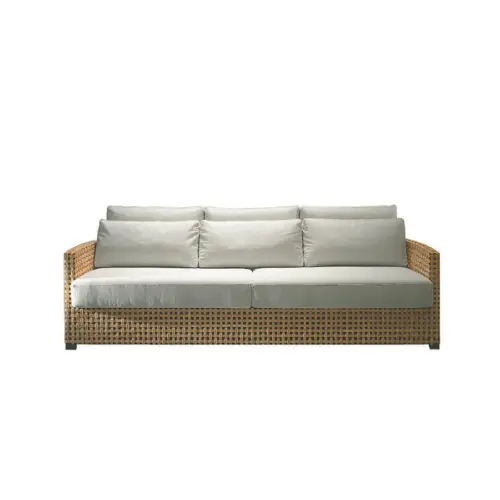
Una estructura de líneas rectas, pero de gran ligereza visual, caracteriza a la familia de sofás WK, disponibles en dos o tres plazas. Una propuesta con un atractivo clásico y exótico al mismo tiempo, con estructura de haya revestida con una textura realizada con entramado de pergamino natural, que contiene suave cojines sueltos de asiento y de respaldo.
-
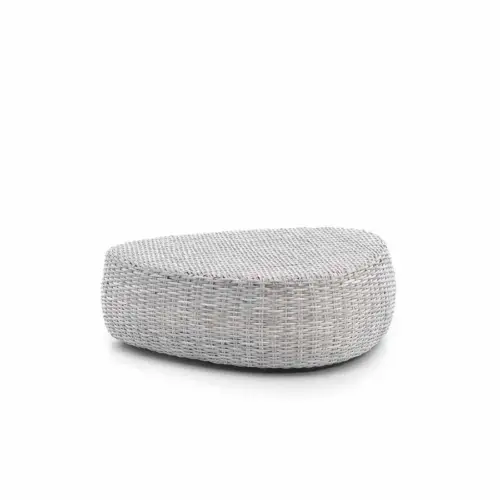
The Panda 11 coffee table is characterized by its triangular shape with rounded corners and full volumes, featuring an aluminum frame and legs, and a white/grey Panda Resin polyethylene synthetic fiber weave. These state-of-the-art synthetic fibers, designed to resist water and light and to maintain their technical and chromatic qualities over time, ensure a very natural and durable appearance.
-
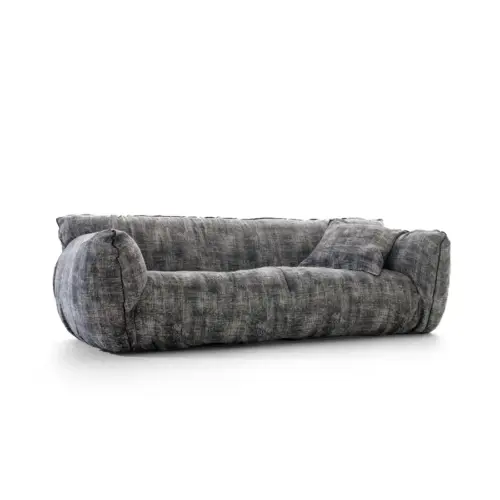
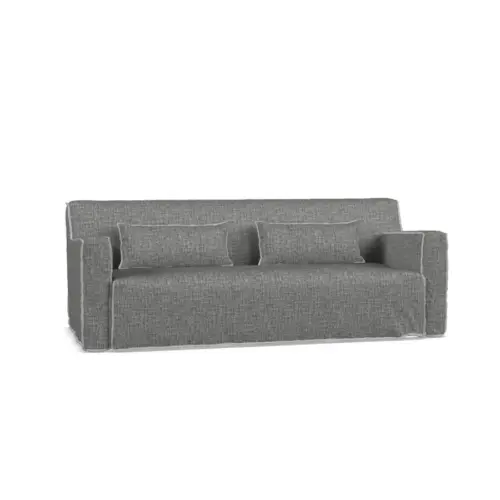
The Nuvola sofa family, with its soft, inviting shapes, boasts an aesthetic that beckons you to sink into it: high arms embrace a seat as deep as a hug, creating a true cocoon effect. Available in two- or three-seater versions, they feature expanded polyurethane foam filling with varying depths, topped with goose down and polyester fiber flakes. The removable cover, with visible seams that trace the product's contours, can be made with any of the covers in the catalog, reflecting the principle of maximum versatility.
-
Soft, generous volumes characterize these products, featuring expanded polyurethane fillings and removable covers with visible seams that define the product's profile. Comfort is enhanced by feather-blend support cushions. More can be made with any of the covers in the catalog, under the motto of maximum versatility.
-
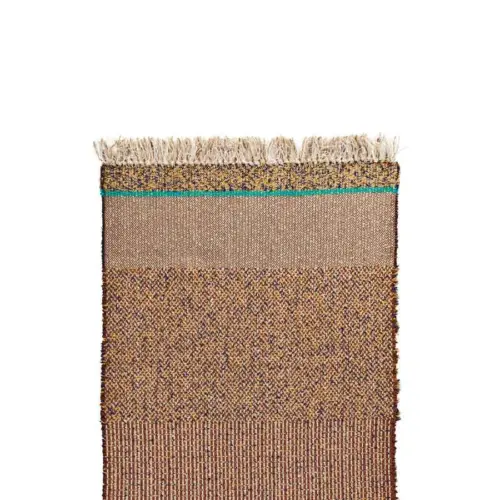
The ECO rugs are the result of extensive research conducted by the company in collaboration with the designer. Initially designed and woven on hand-operated shuttle looms, they were then developed on a repurposed industrial loom, pushed to its limits to create weaves with a handcrafted look. Made from jute and polypropylene, they are available in three variations: “Green Contrast,” which combines an orange-blue bouclé with a green-turquoise melange ribbon; “White Contrast,” made with a rope-colored bouclé and a white melange ribbon; and “Natural Contrast,” which features a yellow and blue-violet bouclé and an earth-toned melange ribbon. This collection of fresh, lightweight, and portable rugs is available in two sizes.
-
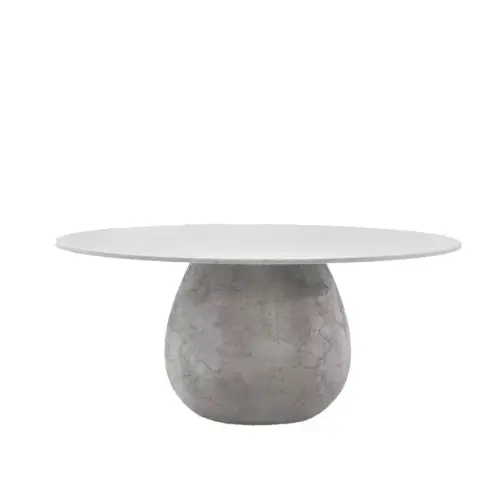
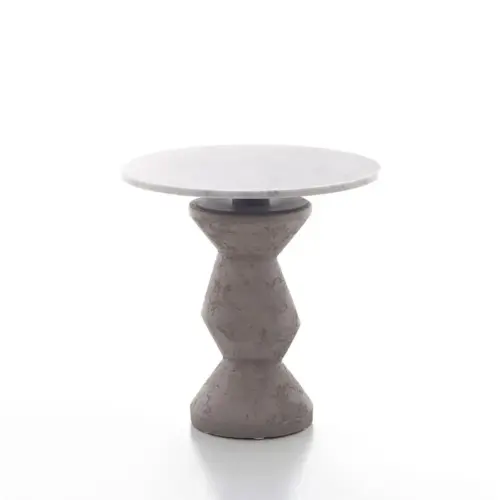
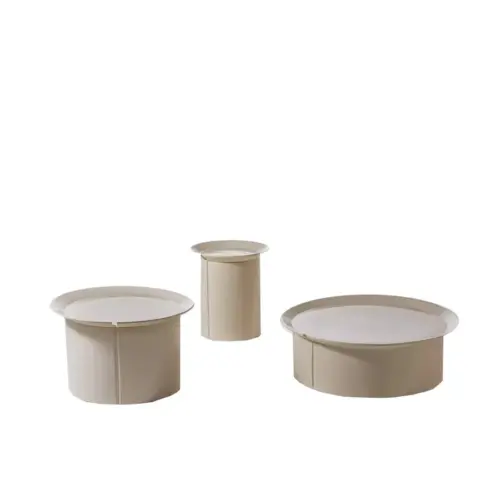
A family of round tables with a central cement base with a crackled finish, the Inout 837/838 are distinguished by their essential character: available in two heights and with a tabletop supported directly on the base or slightly raised, they have an asymmetrical totem structure, with a white Carrara marble tabletop, to give rise to products of sophisticated essentiality.
-
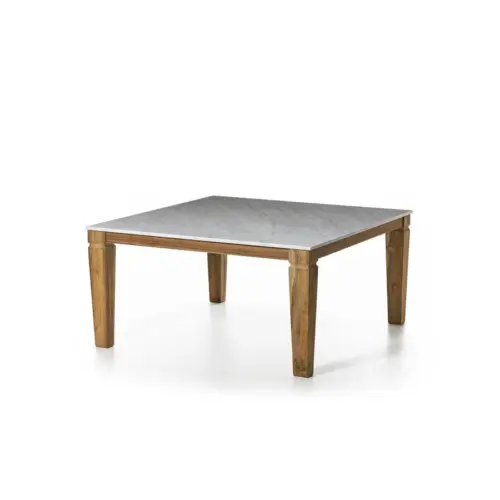
The Jeko 31/33/34 family of square or rectangular tables, with their exotic colonial style, features legs and frames made of EcoTeak. This material is derived from reclaimed teak beams and elements, repaired with recycled wood, assembled, and sanded to reveal the original grain. They are embellished with a white Carrara marble top, creating a piece that plays with the visual contrasts of two different materials.
-
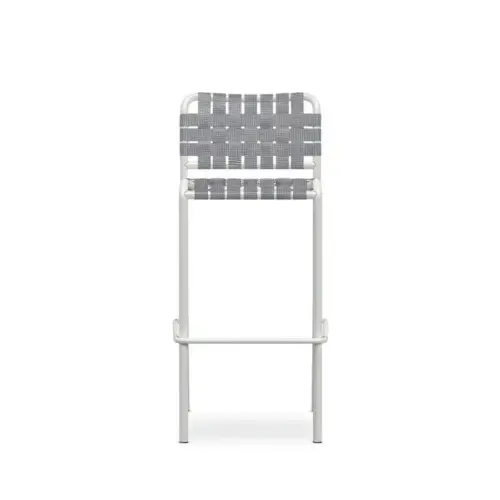
Characterized by its essential and minimalist structure, the Inout 828 stool is built around a lightweight tubular aluminum frame, available in white, gray, or sage—an eco-friendly material unique for its technical qualities. This is complemented by a distinctive weave of elastic straps in gray, black, or blue, an innovative product made from synthetic rubber and polypropylene.
-
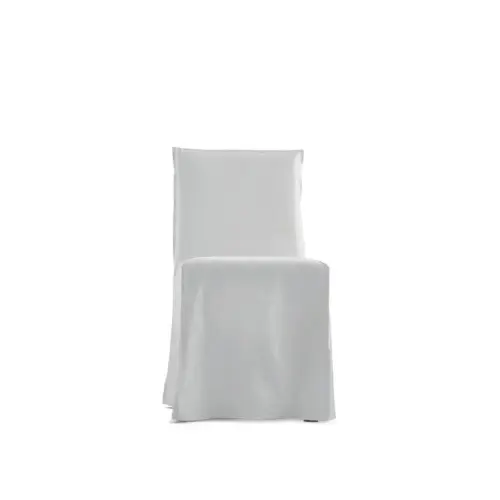
The Ghost Out 23/25 family of upholstered chairs with removable covers offers a comfortable, enveloping seat, available with or without arms, built around a lightweight frame with minimalist proportions. Designed to resist water and sunlight and to maintain their shape and aesthetic appeal over time, they feature a geometric structure where softness is accentuated by loose cushions. Their defining characteristic is the upholstery: a large cover with a profile highlighted by visible stitching, making it easy to remove and change the look each time.
Are you a professional? Contact with us