
-
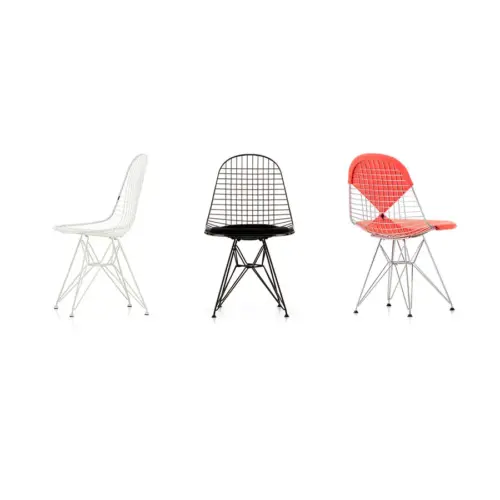
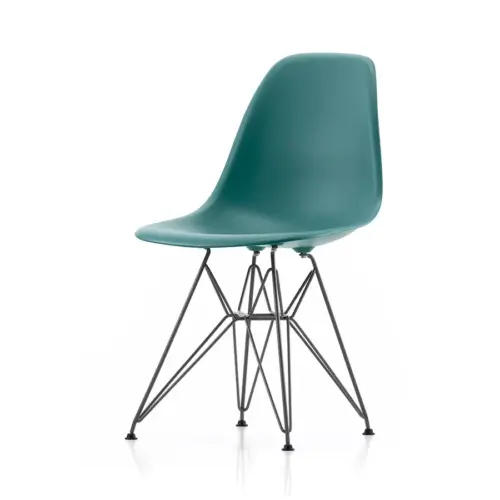
Designed by Charles and Ray Eames, the Wire Chair's seat shell mimics the shape of the Eames Plastic Side Chair. Mounted on the iconic Eiffel Tower base, the DKR combines transparency and functionality. The powder-coated version is also suitable for gardens and patios. The DKR chair is optionally available with a seat cushion or as a two-piece seat and back upholstered in fabric or leather.
-
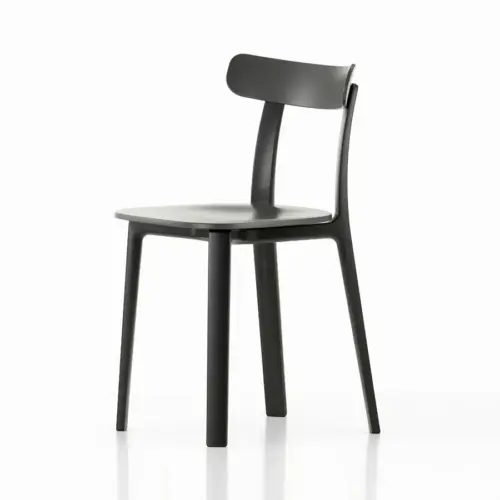
At first glance, the All Plastic Chair is reminiscent of the simple, classic wooden chairs so common in Europe for many decades. However, by adapting the design to an alternative material, both its appearance and performance have been significantly improved. The flat shapes of the frame are molded from a single piece, while the thin surface of the seat has an organic shape and the backrest is thinner than that of conventional wooden chairs.
-
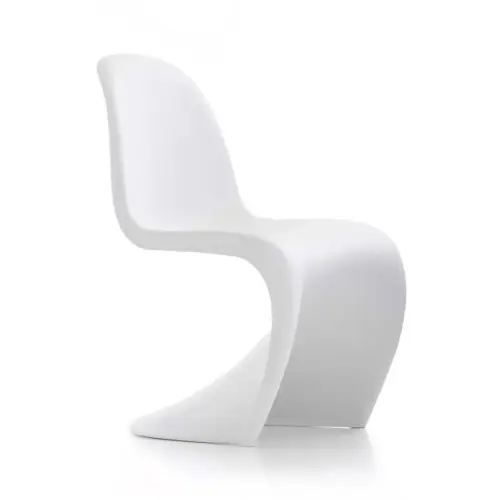
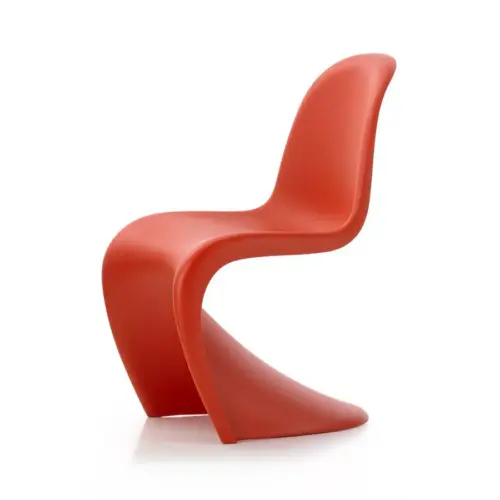
The Panton Chair is a true classic in furniture history. Designed by Verner Panton in 1960, its mass production began in 1967 in collaboration with Vitra. It was the first plastic chair manufactured in a single piece. Since its launch, it has gone through several production phases. Only from 1999 onwards was it possible to manufacture it while faithfully respecting the original concept: in highly resistant molded plastic with an attractive matte finish.
-
The Panton Chair is a true classic in furniture history. Designed by Verner Panton in 1960, its mass production began in 1967 in collaboration with Vitra. It was the first plastic chair manufactured in a single piece. Since its launch, it has gone through several production phases. Only from 1999 onwards was it possible to manufacture it while faithfully respecting the original concept: in highly resistant molded plastic with an attractive matte finish.
-
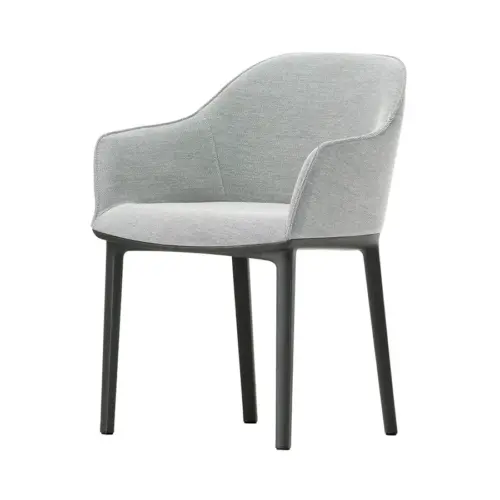
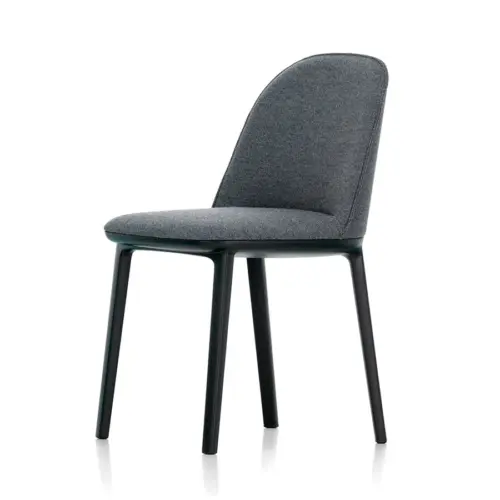
The Softshell Chair's seat structure offers a level of comfort that can only be truly appreciated when you sit down: the vertical slats concealed in the backrest adapt to the user's anatomy, providing great freedom of movement and exceptional comfort even after prolonged sitting. The rounded contours and soft, comfortable padding across its entire surface give the Softshell Chair its warm and inviting character.
-
The Softshell Chair's seat structure offers a level of comfort that can only be truly appreciated when you sit down: the vertical slats concealed in the backrest adapt to the user's anatomy, providing great freedom of movement and exceptional comfort even after prolonged sitting. The rounded contours and soft, comfortable padding across its entire surface give the Softshell Chair its warm and inviting character.
-
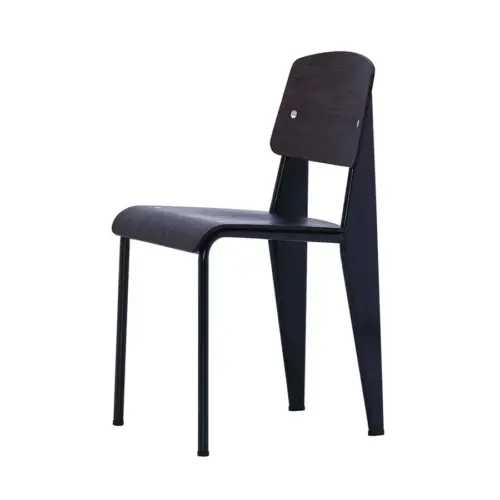
Las sillas soportan más tensión en las patas traseras, ya que son ellas las que absorben el peso de la parte superior del cuerpo. El ingeniero y diseñador Jean Prouvé aplicó esta sencilla idea al inconfundible diseño de la silla Standard: las patas delanteras, que soportan un peso relativamente pequeño, son de acero tubular, mientras que las patas traseras son elementos huecos de gran volumen que transmiten la tensión al suelo.
-
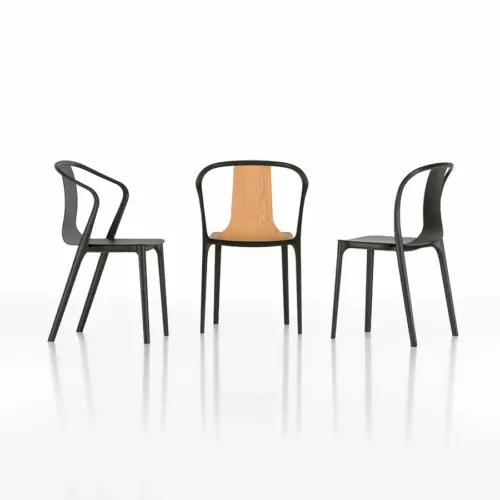
Belleville is the name of a lively Parisian neighborhood where designers Ronan and Erwan Bouroullec have their studio. The Belleville Chair's visual references can be found in the classic furnishings of French restaurants and the cheerful atmosphere of this Parisian corner. The chair's familiar shape—even in a contemporary context—might initially seem obvious, but it also evokes a sense of mystery and intrigue, as the chair's material, structure, and craftsmanship are only revealed upon closer inspection.
-
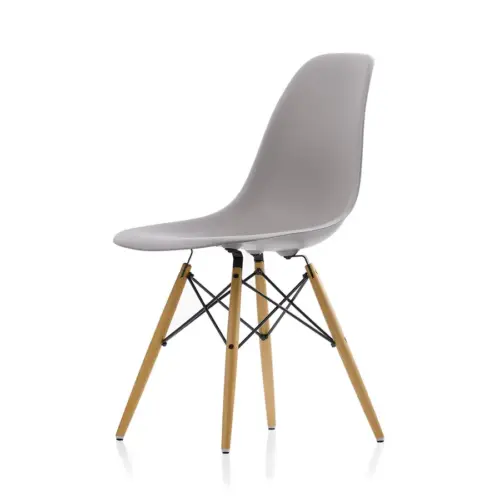
“Getting the most of the best to the greatest number of people for the least”: with these words, Charles and Ray Eames described one of their main goals as furniture designers. None of their works came closer to this ideal than the Plastic Chair. For years, they worked on the idea of a one-piece seat shell molded to fit the contours of the human body. In the 1940s, when their experiments with plywood and aluminum sheeting didn't yield the expected results, their search for alternative materials led them to fiberglass-reinforced polyester resin.
-
“Getting the most of the best to the greatest number of people for the least”: with these words, Charles and Ray Eames described one of their main goals as furniture designers. None of their works came closer to this ideal than the Plastic Chair. For years, they worked on the idea of a one-piece seat shell molded to fit the contours of the human body. In the 1940s, when their experiments with plywood and aluminum sheeting didn't yield the expected results, their search for alternative materials led them to fiberglass-reinforced polyester resin.
Are you a professional? Contact with us