
-
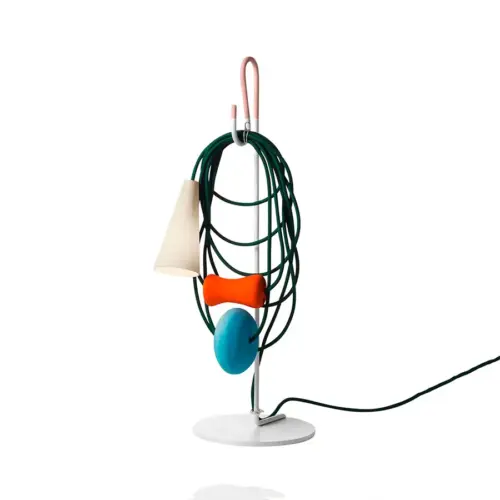
Filo was born from the desire to highlight the different parts that make up a lamp—light source, decoration, and electrical cable—by articulating their structural and aesthetic characteristics, simplifying grammar and syntax. Its essentiality stems from the decision to use decoration to unify the elements, incorporating features not traditionally included. Now, the electrical cable engages in a dialogue with the glass elements and the light diffuser in a rhythmic interplay of roles. While the energy that allows the lamp to perform its illuminating function runs along the cable, the cable also passes through glass spheres and balls, transforming it into the archetype of a necklace, with a cone-shaped porcelain body that projects light onto the cable and the glass spheres, ideally positioned as its pendant. A generous array of colors animates the lamp with multiple identities, from watercolor tones and Murano glass transparencies, to the bright polychromes with an ethnic flavor, to the fluorescent tones of contemporary urban landscapes, allowing it to integrate into the most varied environments.
-
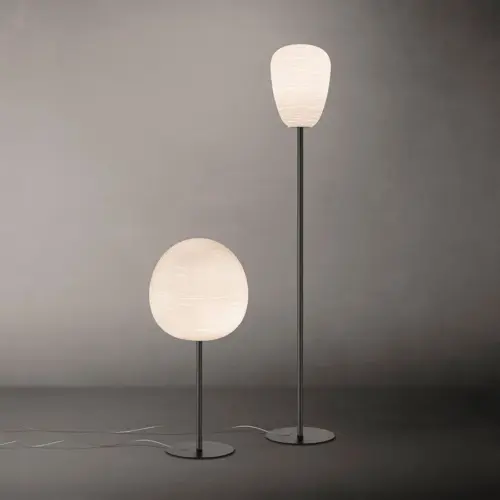
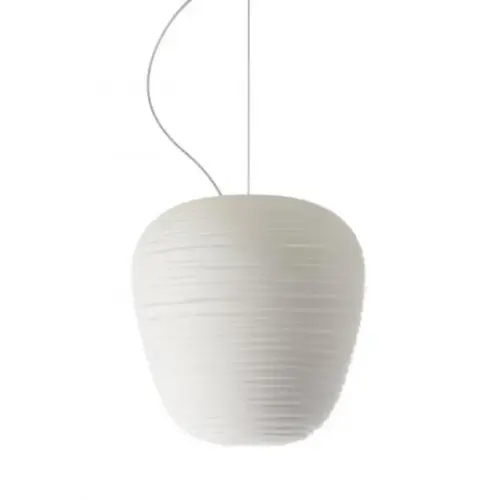
Rituals lamps speak the language of beauty and poetry. They feature mouth-blown glass enriched with fine incisions, reminiscent of the polishing process, the result of masterful craftsmanship. Rituals XL stands out for its generous dimensions and its full, warm, and soft light. Part of the Mix&Match system, Rituals XL Tavolo is available in three colors and can be flexibly combined to define and harmonize the lighting of different spaces. A family of lamps with a relaxing light for very diverse environments that interprets the magic of rice paper or mulberry bark, raw material of Japanese lamps, in the precious corporeality of blown and satin glass.
-
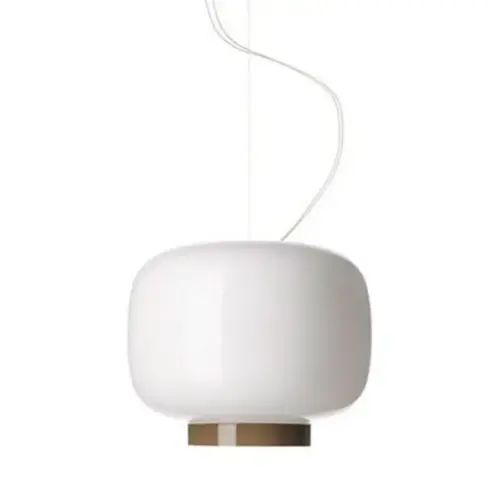
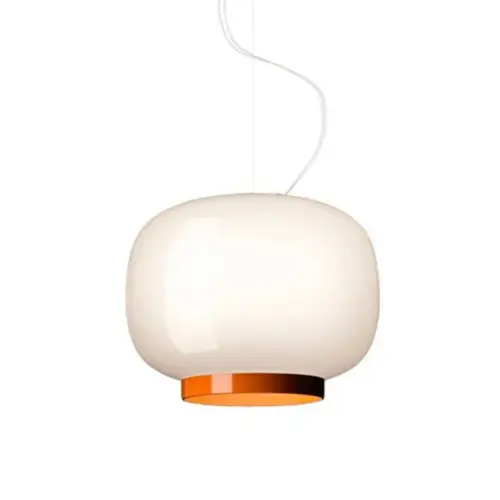
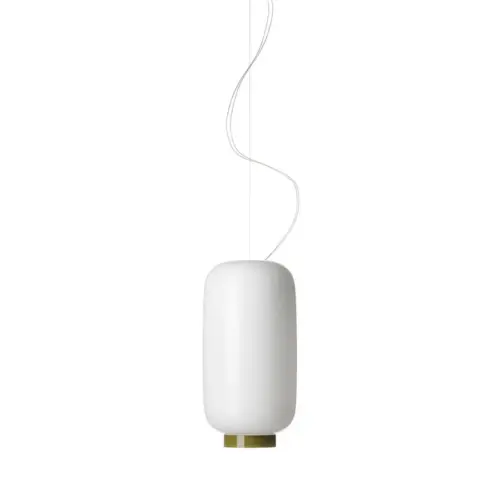
Chouchin is a Japanese word that refers to the traditional and symbolic paper and bamboo lanterns used as illuminated signs outside businesses or as amulets on the exterior of homes. Sober and elegant, Chouchin combines artisanal expertise with a modern and minimalist style. The Chouchin family consists of three models with a colored body in matte glass. Alongside the first version, we find a new version: Chouchin Reverse. The shapes remain the same, but the colors are reversed; the diffuser becomes white while the neck retains the color of the previous version. It's not just a new color, but a new light, a new use. Chouchin Reverse, thanks to its clear blown-glass diffuser, doesn't simply direct light downwards—like the original Chouchin—but also spreads a bright, fluid, and evocative light throughout the surrounding environment.
-
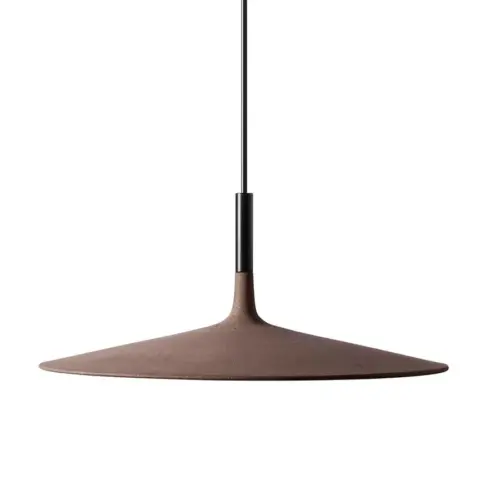
Aplomb Large is a new cement lamp with a distinct shape and functionality compared to the original version. In addition to being wider, Aplomb Large features an integrated LED light source, recessed into the lamp body, which provides a broad downward beam of light, unlike the original Aplomb, which is characterized by focused illumination. Aplomb is handcrafted by expert Italian cement artisans. The design challenge is to achieve thin thicknesses, light forms, and a textured yet pleasant surface. This result is achieved through meticulous care and a deep understanding of the material, which has led to the discovery of a special, highly fluid blend in the mold during production. Among the available colors, to meet diverse design needs, are white, gray, and brown, obtained by adding pigments directly to the mix. Aplomb Large can be placed on a table, peninsula, or counter, at home or in a public space, and is perfect for use alone or in repeated linear compositions.
-
Chouchin is a Japanese word that refers to the traditional and symbolic paper and bamboo lanterns used as illuminated signs outside businesses or as amulets on the exterior of homes. Sober and elegant, Chouchin combines artisanal expertise with a modern and minimalist style. The Chouchin family consists of three models with a colored body in matte glass. Alongside the first version, we find a new version: Chouchin Reverse. The shapes remain the same, but the colors are reversed; the diffuser becomes white while the neck retains the color of the previous version. It's not just a new color, but a new light, a new use. Chouchin Reverse, thanks to its clear blown-glass diffuser, doesn't simply direct light downwards—like the original Chouchin—but also spreads a bright, fluid, and evocative light throughout the surrounding environment.
-
One, two, three light lanterns, yet brimming with seductive tang. Three distinct yet complementary forms, a balance between East and West. A family of lamps that brings a soothing light to diverse settings, translating the magic of rice paper or mulberry bark—the raw materials of Japanese lamps—into the exquisite appearance of blown and satin-finished glass. The horizontal lines etched onto the surface of the lamps create a soft and captivating aesthetic while simultaneously filtering the intensity of the light source, diffusing a full, warm, and gentle glow into the room. With their hand-blown glass bodies and pleasingly plaster-like appearance, the Rituals pendant lamps can be used individually or in harmonious arrangements of 3 to 9 lamps, thanks to the use of a multi-canopy.
-
Chouchin is a Japanese word that refers to the traditional and symbolic paper and bamboo lanterns used as illuminated signs outside businesses or as amulets on the exterior of homes. Sober and elegant, Chouchin combines artisanal expertise with a modern and minimalist style. The Chouchin family consists of three models with a colored body in matte glass. Alongside the first version, we find a new version: Chouchin Reverse. The shapes remain the same, but the colors are reversed; the diffuser becomes white while the neck retains the color of the previous version. It's not just a new color, but a new light, a new use. Chouchin Reverse, thanks to its clear blown-glass diffuser, doesn't simply direct light downwards—like the original Chouchin—but also spreads a bright, fluid, and evocative light throughout the surrounding environment.
-
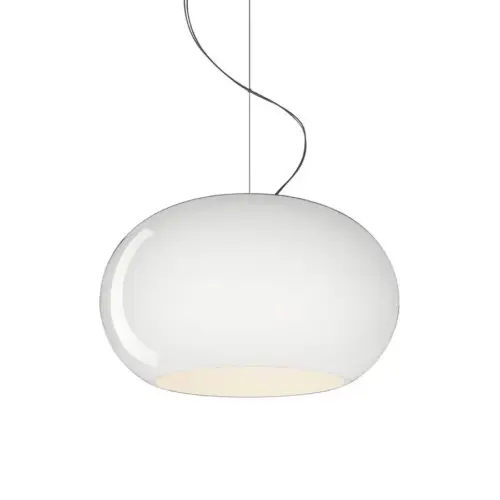
Diffused light pendant lamp. Mouth-blown, jacketed glass diffuser, white on the inside and colored on the outside with a glossy finish. With a "straw" interior, the "warm white" version appears ivory when lit and remains white when off. During the 1990s, Rodolfo Dordoni designed a collection of table, floor, and pendant lamps for Foscarini, featuring strikingly colored blown-glass diffusers and names that evoked natural elements: Fruits, Blossom, and Buds. Now, Buds is being revamped once again, interpreting contemporary tastes to achieve a refined richness and attention to materials. The star of the project, as always, is the blown glass, crafted with five layers of artisanal technique, immediately apparent thanks to the diffuser's wider cut. With the new color range—cool brown, cool gray, bamboo green, and white, with a straw-like interior—Buds takes on a dual character: warm when the lamp is on and cool when it is off.
-
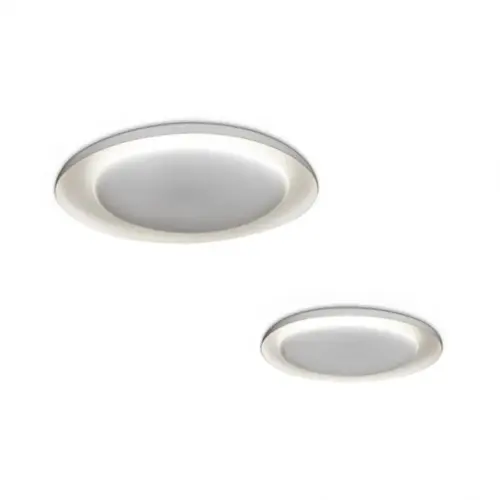
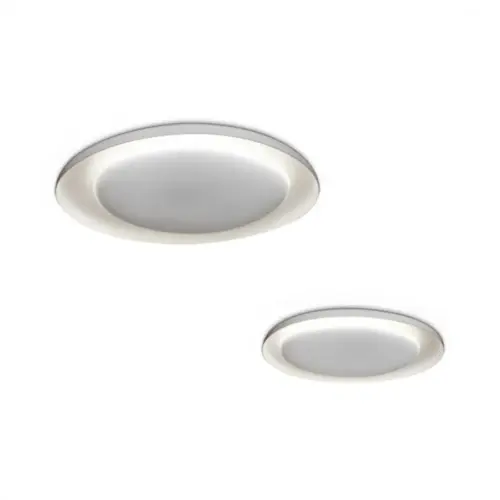
Bahia, a name that evokes white sand beaches, sunny landscapes, and the elegance of Bossa Nova, offers an attractive, captivating light with a unique design and an innovative interplay of light and shadow. Its seductive and timeless form recalls an aerial view of an archipelago, radiating its nuances to define concentric zones. The natural evolution of Bahia is now available in LED. Foscarini has developed and contributed its design engineering to the LEDs in this model, enhancing the magic of the light. The mini version features a larger disc. The Bahia mini offers great potential for both residential and contract use, especially in the energy-efficient, low-maintenance LED version.
-
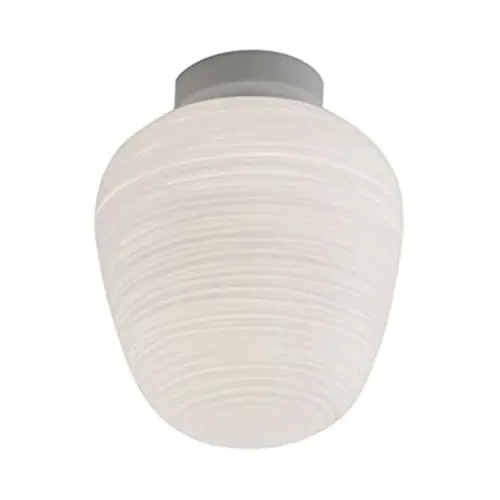
Rituals is a meeting point between East and West, memory and contemporary design, poetic inspiration and technological research. A family of distinct yet complementary forms translates the luminous magic of oriental rice paper lanterns into the exquisite appearance of blown glass. The unique glasswork, with its irregular lines that strike the surface, is achieved through the industrialization of the traditional polishing process. The result is a soft and captivating decoration that creates an inimitable sense of chiaroscuro and a gentle, diffused light. The strength of this design concept has allowed for the development of new sizes and variations. We're not talking about simple adaptations, but rather genuine explorations of further possibilities for this project. The ceiling version, available in three different shapes and sizes, also showcases the diffuser in its entirety thanks to a discreet structure—a pure and simple circular form that lets the glass take center stage.
-
Bahía is a wall and ceiling lamp that seduces and attracts, thanks to its unique design and the unprecedented interplay of light and shadow it creates. Its charm arises from the superimposition of three plates, imperceptibly asymmetrical in profile and in their relative arrangement. The first two house the light source, accompanying and embracing the light that flows across their concave surface, fading towards the edges. The third element completes the composition, standing out in bold and contrasting silhouette against the light. Each glimmer emanating from Bahía is contained within a broader, more diffused glow, a magical composition of light and shadow that makes it both an illuminating object and a luminous decoration. Bahía is offered in a single, absolute color, white, to highlight its essential, almost theatrical presence, its very being without appearing. Bahía can single-handedly decorate an entire wall, with its minimal thickness, or create multiple compositions, luminous archipelagos in domestic or public spaces.
-
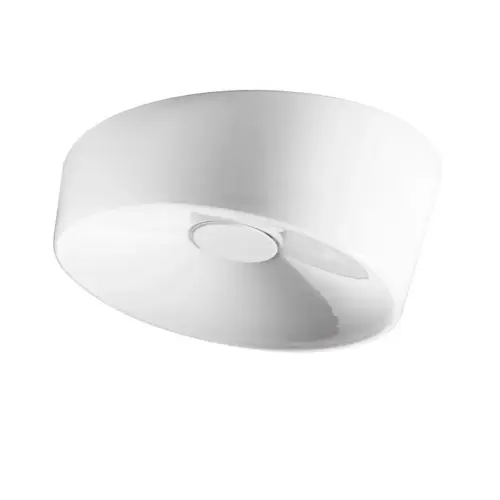
New, essential, and unprecedented geometries, crafted with artisanal skill by master glassmakers, define the ceiling versions of Lumiere XXL and Lumiere XXS, capable of imbuing any space with their inherent dynamism. This movement is created by the bold lines and the orientation of the diffuser's upper surface, set at an angle to the support platform, thanks to a cut that sections the glass in a surprising and original way. By using the two sizes in multiples or simply by orienting the glass differently, it is possible to create a play of balanced and vibrant compositions.
Are you a professional? Contact with us