
-
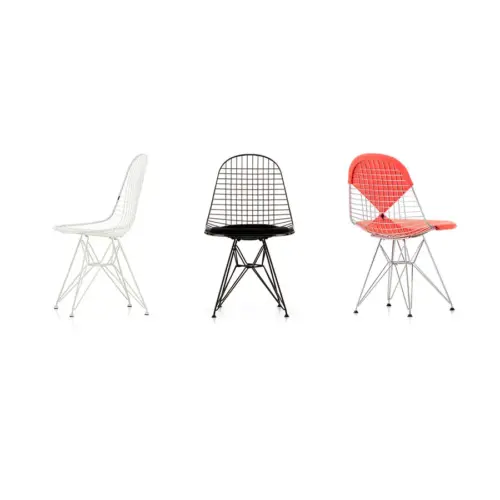
Designed by Charles and Ray Eames, the Wire Chair's seat shell mimics the shape of the Eames Plastic Side Chair. Mounted on the iconic Eiffel Tower base, the DKR combines transparency and functionality. The powder-coated version is also suitable for gardens and patios. The DKR chair is optionally available with a seat cushion or as a two-piece seat and back upholstered in fabric or leather.
-
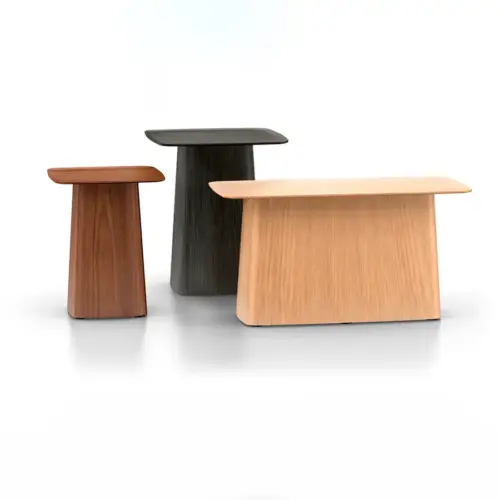
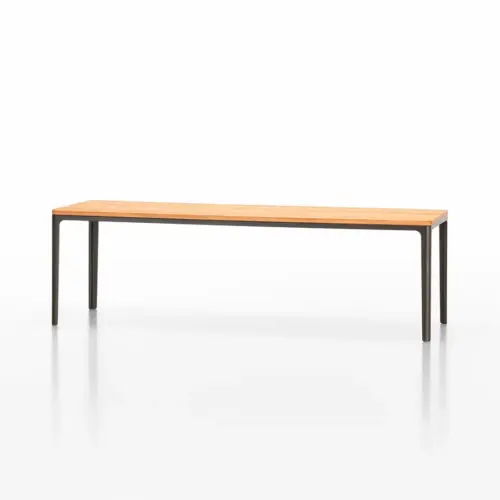
The design of the Wooden Side Tables corresponds to that of the Metal Side Tables created for Vitra by Ronan and Erwan Bouroullec in 2004. As with their counterparts, the appeal of these wooden side tables lies in the contrast between the delicate tabletops and the robust appearance of their pedestal bases. One of their distinguishing features is the gently molded edges of the tabletops, which form a subtle rim, lending them an elegant Japanese feel.
-
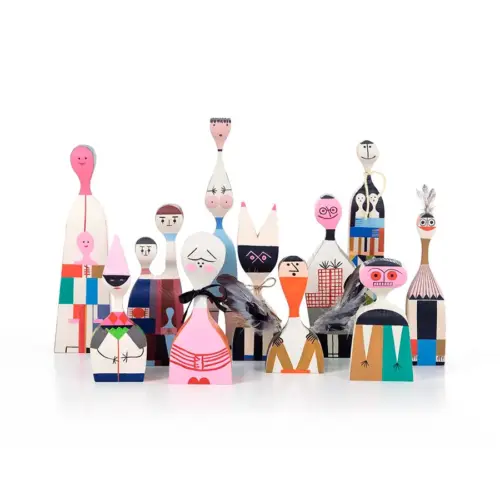
The numerous models in Alexander Girard's Wooden Dolls family are lovingly hand-painted, one by one. This film showcases the steady hand required for each brushstroke in this meticulous craft and why each of these wooden figures is a unique object. VIDEO
-
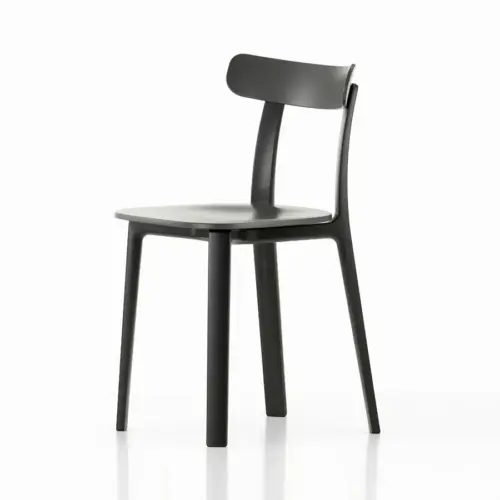
At first glance, the All Plastic Chair is reminiscent of the simple, classic wooden chairs so common in Europe for many decades. However, by adapting the design to an alternative material, both its appearance and performance have been significantly improved. The flat shapes of the frame are molded from a single piece, while the thin surface of the seat has an organic shape and the backrest is thinner than that of conventional wooden chairs.
-
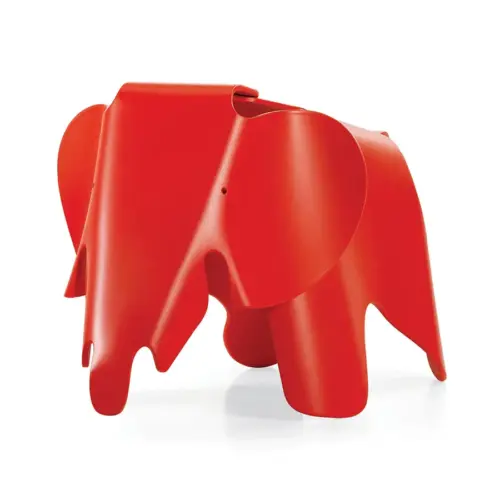
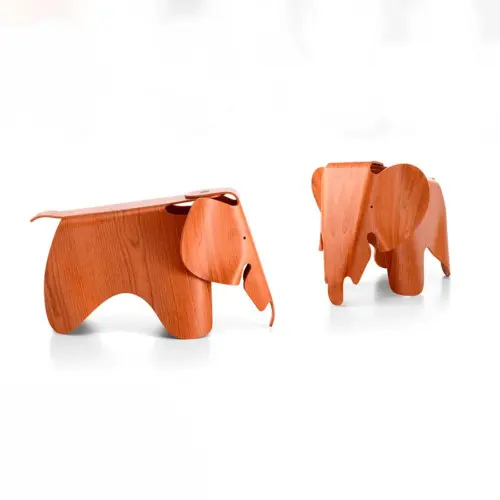
In the early 1940s, Charles and Ray Eames spent several years developing and perfecting a technique for molding laminated wood into three-dimensional shapes. During this process, they created several pieces of furniture and sculptures. Of these early designs, the two-piece elephant was the most technically complex object, due to its many tight curves. It never reached the production stage. One of the prototypes was given to Charles's daughter, Lucia Eames, who was 14 at the time. Later, it was loaned to the Museum of Modern Art in New York for the 1946 exhibition. It remains in the Eames family's possession.
-
In the early 1940s, Charles and Ray Eames spent several years developing and perfecting a technique for molding laminated wood into three-dimensional shapes. During this process, they created several pieces of furniture and sculptures. Of these early designs, the two-piece elephant was the most technically complex object, due to its many tight curves. It never reached the production stage. One of the prototypes was given to Charles's daughter, Lucia Eames, who was 14 at the time. Later, it was loaned to the Museum of Modern Art in New York for the 1946 exhibition. It remains in the Eames family's possession.
-
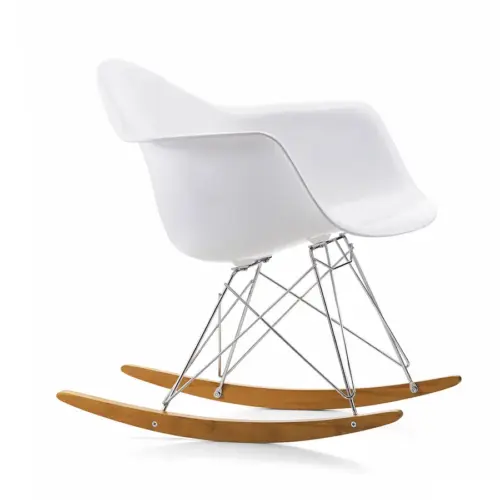
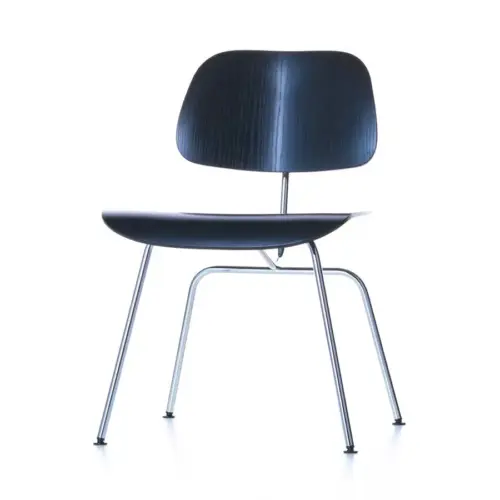
“Getting the most of the best to the greatest number of people for the least”: with these words, Charles and Ray Eames described one of their main goals as furniture designers. None of their works came closer to this ideal than the Plastic Chair. For years, they worked on the idea of a one-piece seat shell molded to fit the contours of the human body. In the 1940s, when their experiments with plywood and aluminum sheeting didn't yield the expected results, their search for alternative materials led them to fiberglass-reinforced polyester resin.
-
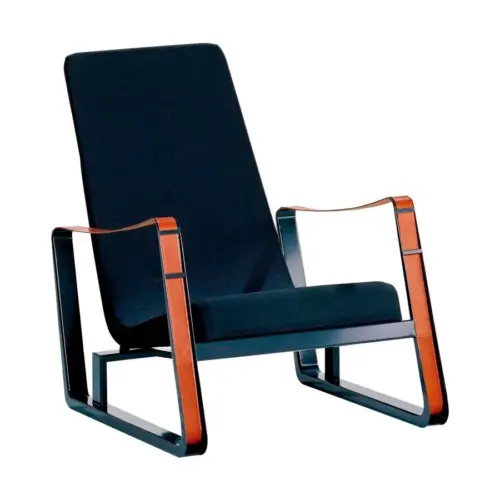
The Cité armchair, designed for a competition to furnish the student residence at the Cité Universitaire de Nancy, is one of Prouvé's early masterpieces. This dynamic armchair, with its distinctive powder-coated steel sleds and wide leather straps as armrests, was used by Prouvé himself in his living room. Its generous dimensions and inviting upholstery contribute to its exceptional comfort.
-
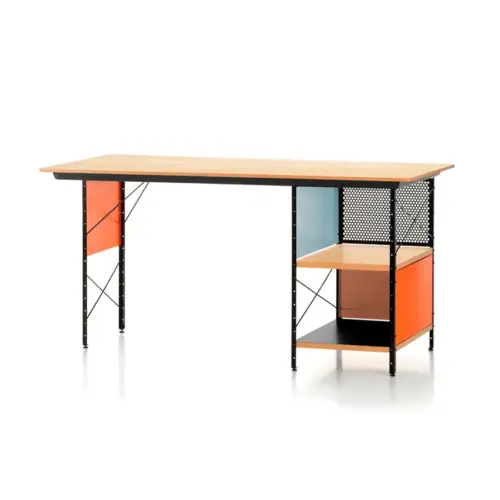
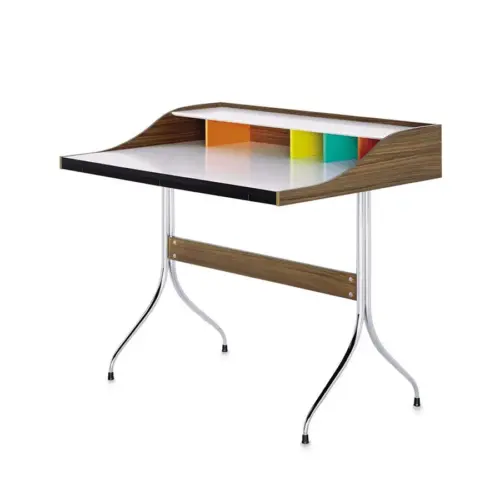
In collaboration with the Eames Office and Dutch designer Hella Jongerius, a new color palette was carefully selected to give EDU a fresh, contemporary look while also paying homage to the spirit of the 1940s and 50s. With its attractive combination of colored panels, the EDU Desk adds a cheerful and inviting touch to any home office. The panels also serve as a discreet screen and partially conceal the two storage compartments. The metal support frame is height-adjustable to accommodate uneven floors.
-
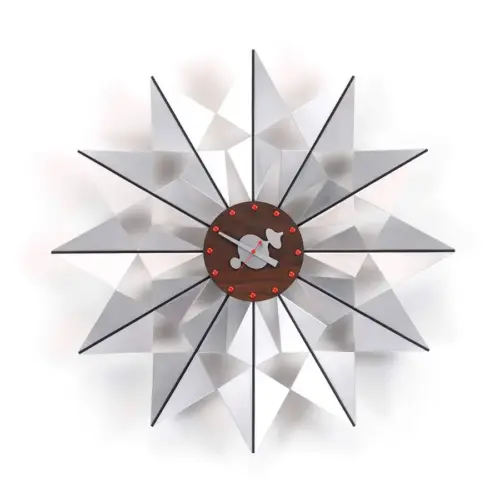
These ideas formed the basis of their first collection of 14 pieces, which included wall clocks and small table clocks with a completely new style and were introduced to the market in 1949. Although all models shared a common characteristic – the absence of numbers – the diversity of shapes, colors, materials and designs could not have been greater.
-
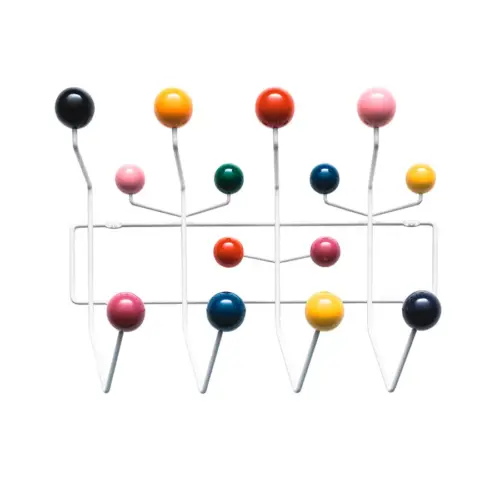
The original color scheme of "Hang it all" was conceived by Ray Eames. To celebrate its centenary in December 2012, Vitra and the Eames Office developed three versions of the coat rack in new colors: red, green, and white.
-
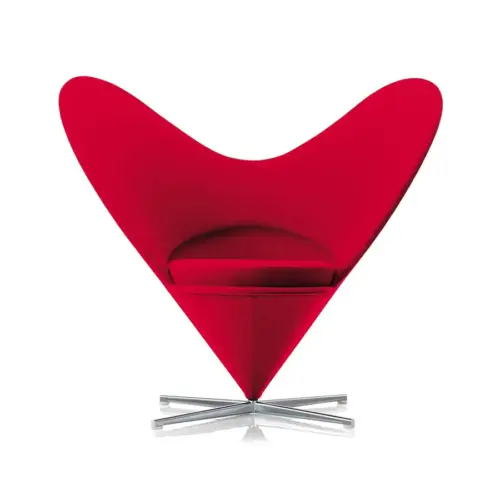
Verner Panton had a profound influence on the evolution of design in the 1960s and 70s. After moving to Switzerland in the early 1960s, the Danish designer became known for his innovative inventions and ideas for furniture, lighting, and textiles. His masterful use of color was one of the defining characteristics of his work.
-
George Nelson is considered one of the most important figures in American design. An architect, product and exhibition designer, and writer, he was a leading voice in the discourse on design and architecture for several decades. Vitra is the only authorized manufacturer of products specified by Nelson for the European and Middle Eastern markets.
-
Charles and Ray Eames are among the most important figures in 20th-century design. Their work encompasses fields such as furniture design, film, photography, and exhibition design. Vitra is the only company authorized to manufacture their products in Europe and the Middle East. If you own an Eames product manufactured by Vitra, you can be sure it is an authentic Eames.
-
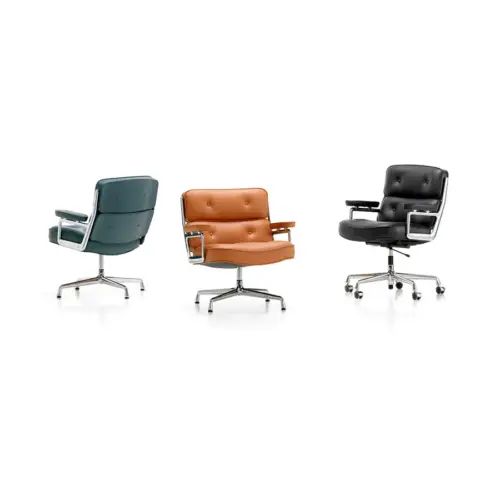
The Lobby Chair comes in three versions: the ES 104 swivel office chair, the ES 108 meeting chair on glides, and the ES 105 armchair, wider and lower, for lobbies and waiting rooms.
-
Known for his original perspective, Jasper Morrison is one of the most renowned industrial designers of recent decades. Together with his colleague Naoto Fukasawa, he defined the term "supernormal," which, for him, answers the question of what constitutes "good design." In his work, he strives to create exemplary models of understated, functional, and responsible design. Morrison has collaborated with Vitra on several projects, including the All Plastic Chair, the Soft Modular Sofa, and the HAL chair family. His designs are featured in the Museum of Modern Art in New York and in other major museum collections worldwide.
-
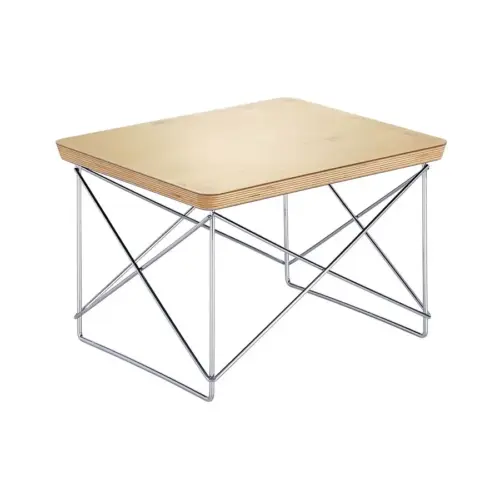
The LTR is offered with a chrome-plated or powder-coated base in black and with different boards to choose from: solid wood with a natural finish, HPL plywood, or plywood with gold leaf and clear varnish.
-
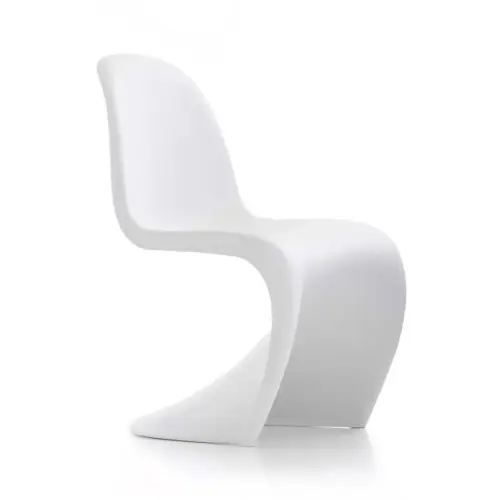
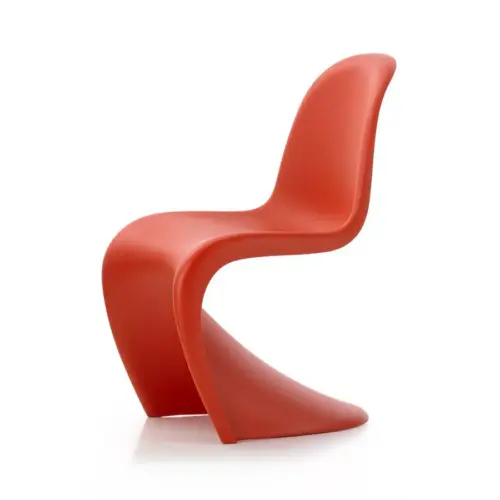
The Panton Chair is a true classic in furniture history. Designed by Verner Panton in 1960, its mass production began in 1967 in collaboration with Vitra. It was the first plastic chair manufactured in a single piece. Since its launch, it has gone through several production phases. Only from 1999 onwards was it possible to manufacture it while faithfully respecting the original concept: in highly resistant molded plastic with an attractive matte finish.
-
The Panton Chair is a true classic in furniture history. Designed by Verner Panton in 1960, its mass production began in 1967 in collaboration with Vitra. It was the first plastic chair manufactured in a single piece. Since its launch, it has gone through several production phases. Only from 1999 onwards was it possible to manufacture it while faithfully respecting the original concept: in highly resistant molded plastic with an attractive matte finish.
-
De acuerdo con la filosofía de diseño «supernormal» de Jasper Morrison, las Plate Dining Tables se caracterizan por su forma clásica y sencilla y sus proporciones perfectamente equilibradas. Disponibles en varios tamaños, el atractivo de estas mesas radica en la interacción entre sus sutiles curvas y la nitidez de los bordes. La elegante base y el fino tablero de madera maciza de calidad superior, mármol o MDF con revestimiento al polvo, se combinan para formar un conjunto armonioso en el que, sin embargo, los elementos aparecen claramente diferenciados entre sí.
-
Charles and Ray Eames are among the most important figures in 20th-century design. Their work encompasses fields such as furniture design, film, photography, and exhibition design. Vitra is the only company authorized to manufacture their products in Europe and the Middle East. If you own an Eames product manufactured by Vitra, you can be sure it is an authentic Eames.
-
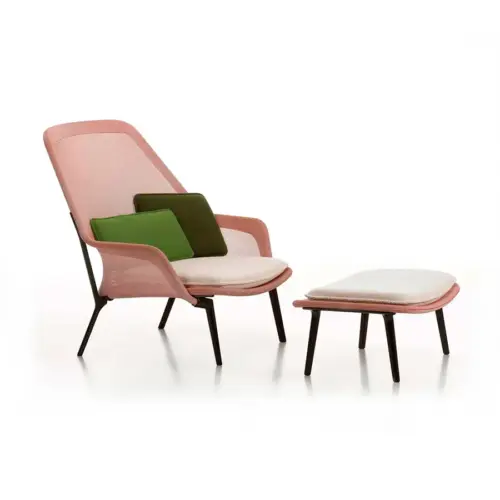
For this voluminous armchair, Ronan and Erwan Bouroullec used an extremely durable knit fabric that fits the chair's frame like a glove. Thanks to the knit upholstery, the Slow Chair combines soft comfort with ergonomic support, enhanced by the thin seat and back cushions. The translucent upholstery replaces the thick cushions of traditional armchairs, creating a light yet generously proportioned design. Whether in the living room or on the porch, the Slow Chair stands out as a discreet and elegant armchair that maintains a high level of comfort.
-
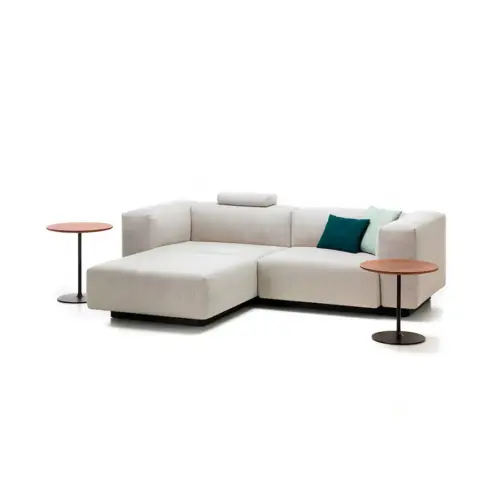
The Soft Modular Sofa by Jasper Morrison is a modern take on a piece of furniture that has become a true "modern classic": the low, elongated modular sofa with its decidedly horizontal character. With its carefully balanced proportions, exceptional comfort, and deliberate absence of decorative details, the Soft Modular Sofa embodies the essence of this type of sofa in its purest form.
-
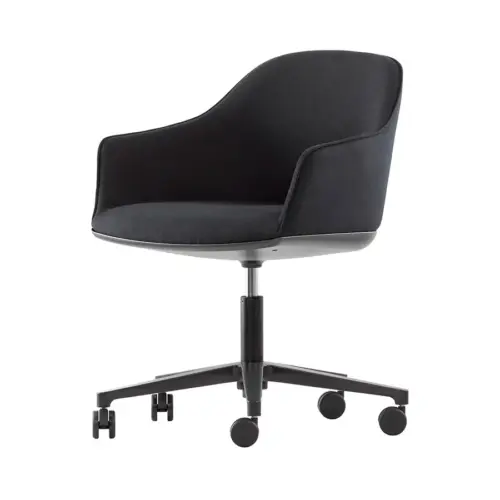
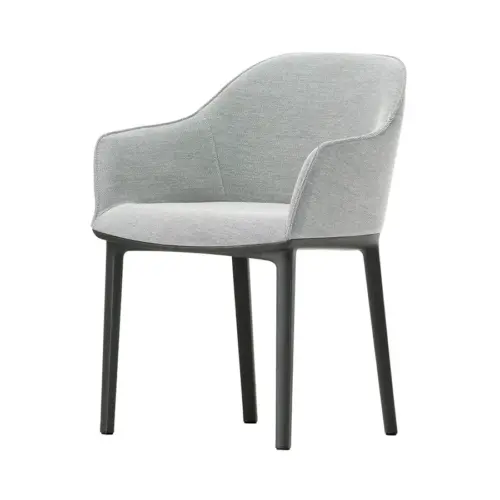
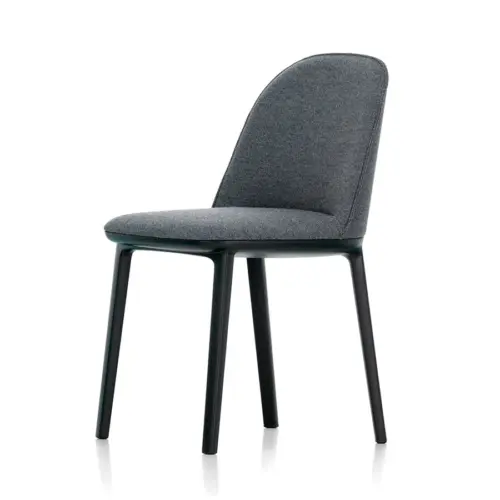
The Softshell Chair offers exceptional comfort thanks to the flexible slats concealed within the backrest shell. Designed by Ronan and Erwan Bouroullec, this elegant and understated chair with a four-spoke base is available in a variety of colors and upholstered in leather or fabric.
-
The Softshell Chair's seat structure offers a level of comfort that can only be truly appreciated when you sit down: the vertical slats concealed in the backrest adapt to the user's anatomy, providing great freedom of movement and exceptional comfort even after prolonged sitting. The rounded contours and soft, comfortable padding across its entire surface give the Softshell Chair its warm and inviting character.
-
The Softshell Chair's seat structure offers a level of comfort that can only be truly appreciated when you sit down: the vertical slats concealed in the backrest adapt to the user's anatomy, providing great freedom of movement and exceptional comfort even after prolonged sitting. The rounded contours and soft, comfortable padding across its entire surface give the Softshell Chair its warm and inviting character.
-
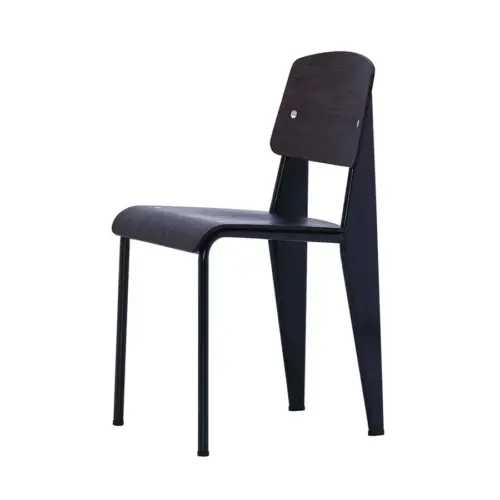
Las sillas soportan más tensión en las patas traseras, ya que son ellas las que absorben el peso de la parte superior del cuerpo. El ingeniero y diseñador Jean Prouvé aplicó esta sencilla idea al inconfundible diseño de la silla Standard: las patas delanteras, que soportan un peso relativamente pequeño, son de acero tubular, mientras que las patas traseras son elementos huecos de gran volumen que transmiten la tensión al suelo.
-
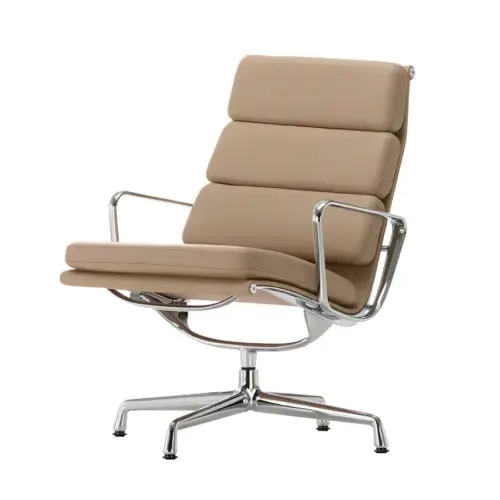
The Soft Pad Group design dates back to 1969. In both construction and form, the Soft Pad Chairs are similar to the Aluminium Group. However, the stitched cushions create a striking contrast with the slender aluminum profiles. The Soft Pad Group chairs are plusher and more voluptuous than those of the Aluminium Group, yet they retain the same clean lines. The chairs conform to the body and provide exceptional comfort. Vitra has been producing Soft Pad Group chairs for decades, always maintaining high quality. This experience allows us to offer a 30-year guarantee* on all Soft Pad Group chair models.
Are you a professional? Contact with us