
-
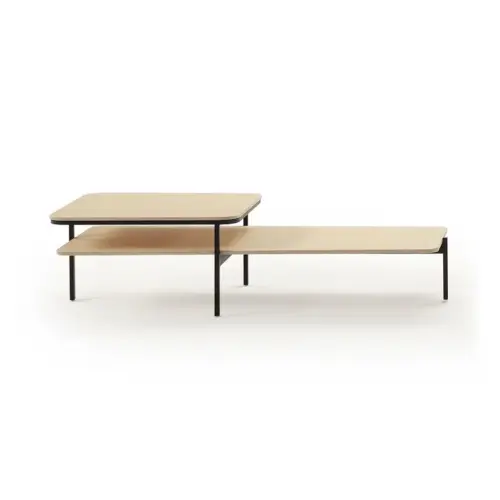
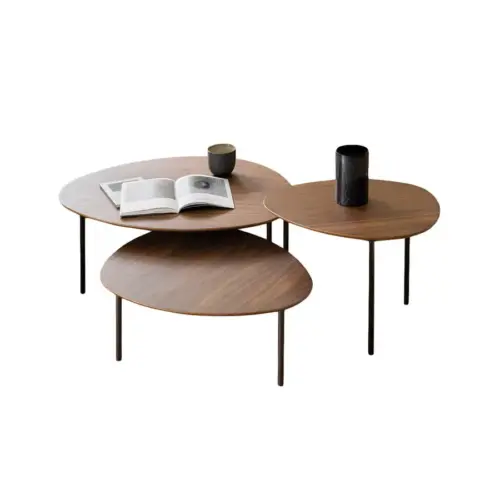
The Duplex collection consists of a small family of side tables inspired by the rational architecture of Mies van der Rohe and Frank Lloyd Wright. The architectural game reaches its maximum development by superimposing tables of different sizes, although all versions have two floors in which to have a wide variety of objects and functionalities. Las estructuras son de metal lacado y las tapas de chapa de fresno combinada con tableo marino. Las bandejas superiores son opcionales y combinables entre las distintas medidas. El colorido es tan amplio como nuestra actual carta de tintes y lacas.
-
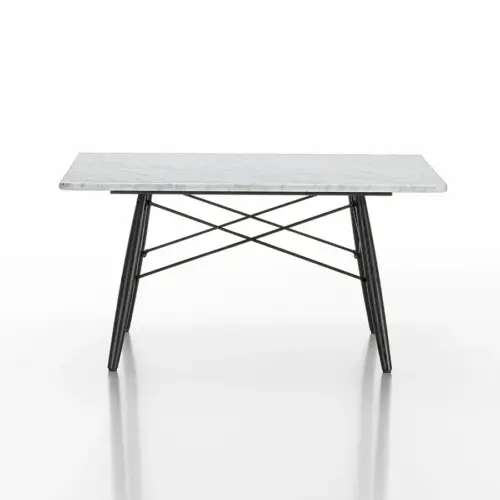
En 1949, Charles y Ray Eames diseñaron una mesa de café pensada exclusivamente para su propia residencia, la legendaria Eames House de Pacific Palisades, cerca de Los Ángeles. Desde entonces, esta mesa ha pasado a formar parte de la singular decoración de este lugar histórico. Su tablero rectangular, que le da al mismo tiempo una imagen de sencillez y sofisticación, estaba originalmente cubierto de pan de oro. La base con patas cónicas es una variación de la base de madera de las Eames Plastic Chairs. En los años siguientes, Charles y Ray Eames fabricaron otras dos de estas mesas con tableros distintos, uno de mármol y otro de madera.
-
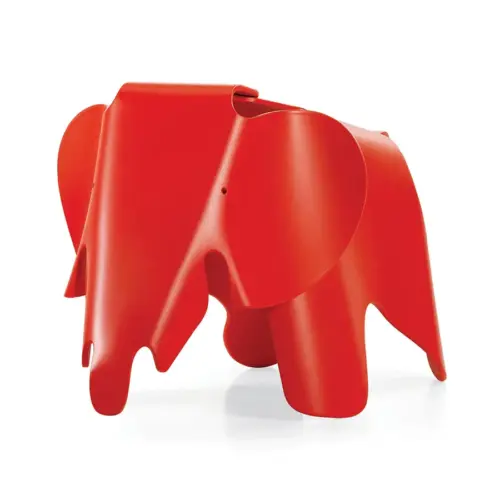
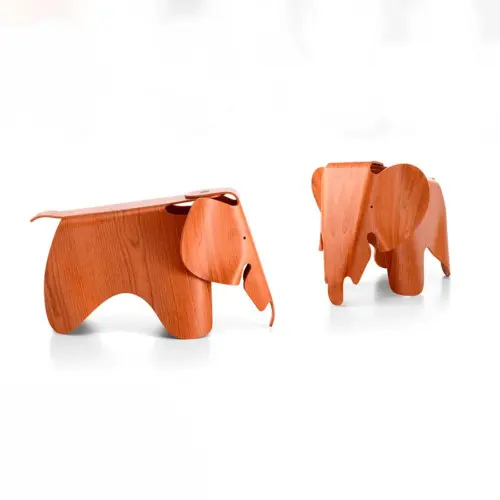
In the early 1940s, Charles and Ray Eames spent several years developing and perfecting a technique for molding laminated wood into three-dimensional shapes. During this process, they created several pieces of furniture and sculptures. Of these early designs, the two-piece elephant was the most technically complex object, due to its many tight curves. It never reached the production stage. One of the prototypes was given to Charles's daughter, Lucia Eames, who was 14 at the time. Later, it was loaned to the Museum of Modern Art in New York for the 1946 exhibition. It remains in the Eames family's possession.
-
In the early 1940s, Charles and Ray Eames spent several years developing and perfecting a technique for molding laminated wood into three-dimensional shapes. During this process, they created several pieces of furniture and sculptures. Of these early designs, the two-piece elephant was the most technically complex object, due to its many tight curves. It never reached the production stage. One of the prototypes was given to Charles's daughter, Lucia Eames, who was 14 at the time. Later, it was loaned to the Museum of Modern Art in New York for the 1946 exhibition. It remains in the Eames family's possession.
-
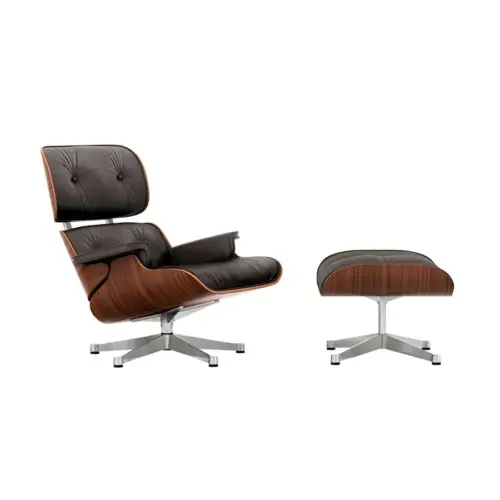
The original Lounge Chair by Charles and Ray Eames is more than just an armchair; it's a masterpiece of 20th-century design. Created in 1956, this lounge chair—along with its inseparable ottoman—has transcended trends, styles, and generations to become a true symbol of elegance, comfort, and sophistication. Its enveloping design, curved wood frame, and plush leather cushions ensure that every detail is carefully considered to provide a completely comfortable experience with an unmistakable aesthetic.
This armchair is not just a museum piece: it is a seat created to be used, lived in and enjoyed every day.
-
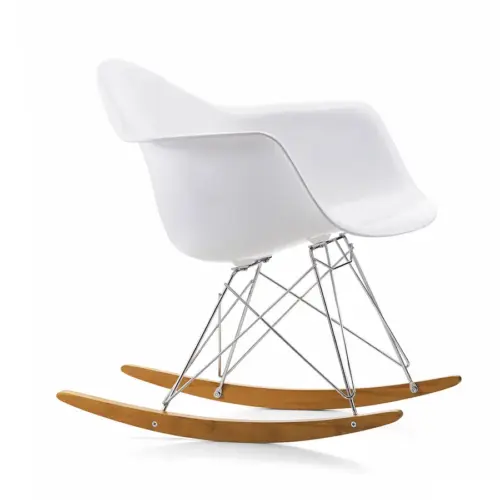
“Getting the most of the best to the greatest number of people for the least”: with these words, Charles and Ray Eames described one of their main goals as furniture designers. None of their works came closer to this ideal than the Plastic Chair. For years, they worked on the idea of a one-piece seat shell molded to fit the contours of the human body. In the 1940s, when their experiments with plywood and aluminum sheeting didn't yield the expected results, their search for alternative materials led them to fiberglass-reinforced polyester resin.
-
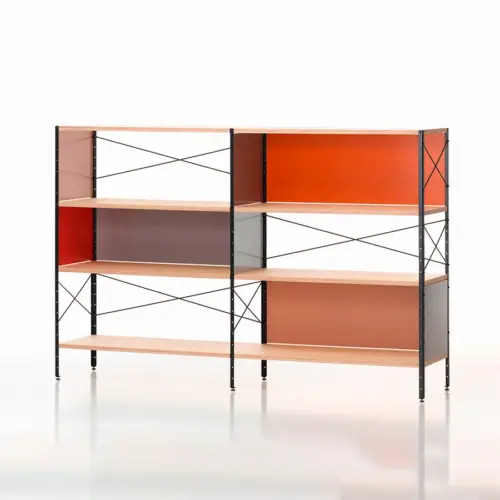
In 1949, Charles and Ray Eames designed an innovative system of freestanding, multifunctional shelving and desks. Like the Eames House, built around the same time, these designs adhered to the principles of industrial production: we're talking about the Eames Storage Unit (ESU) and the Eames Desk Unit (EDU). In collaboration with the Eames Office and Dutch designer Hella Jongerius, the new colors were carefully defined to give ESU a renewed and contemporary look, but at the same time, pay homage to the spirit of the forties and fifties.
-
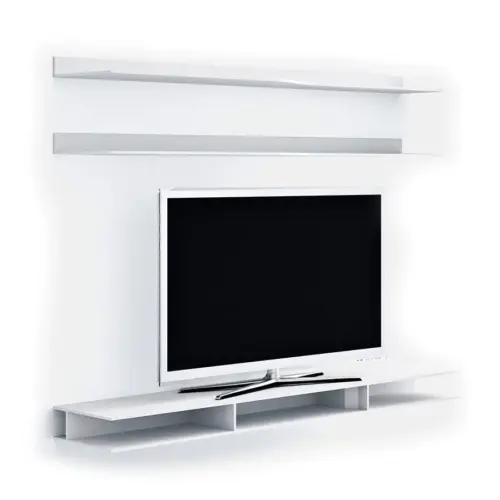
Easy Wave design by Metrica, Bruno Fattorini, Robin Rizzini. This unstructured version of the Wave Wall system allows for the creation of diverse, more restrained and subtle compositions with fewer elements, making it more versatile throughout the home. The visual and functional characteristics remain unchanged, maintaining the design and dynamic nature of the original product. The shelves are made of 9 mm thick white acrylic solid surface. Some shelves feature varying depths (35/25 and 25/15 cm) connected by a clever, sinuous design.
-
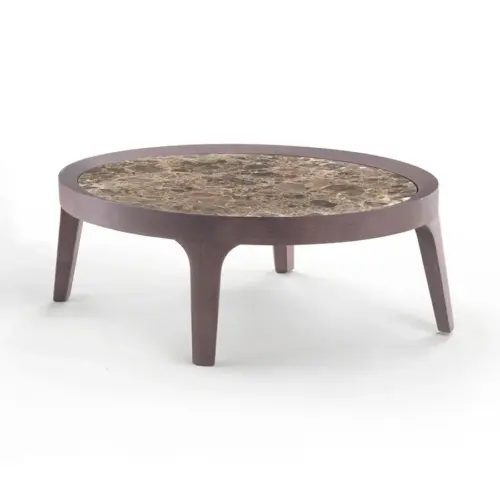
Eaton coffee tables rest on an elegant base of solid ash, varnished in shades of ebony, wenge, brown, or red. The round or oval tabletops are crafted from exquisite marble insets within the solid wood frame, or are also available in wood with the same finish as the structure. Eaton coffee tables are highly versatile pieces that can be easily combined with all the armchairs and sofas in the Flexform Mood collection.
Are you a professional? Contact with us