
-
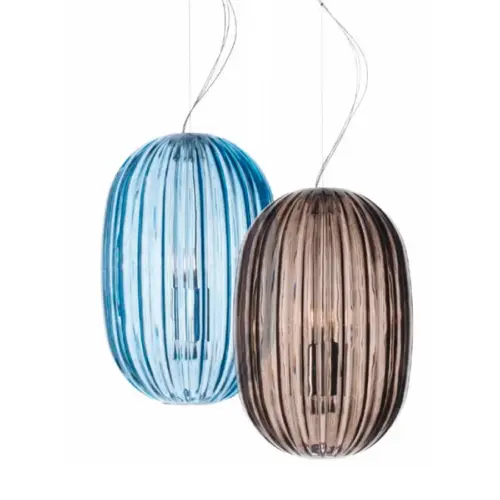
Plass, whose name is a synthesis of "plastic" and "glass," interprets the age-old artisanal tradition of glassmaking through the lens of a contemporary material and process: rotationally molded transparent polycarbonate. Thanks to this technology, not yet widely used in the lighting sector, the finishes are not impersonal and cold; on the contrary, they are characterized by subtle irregularities, highlighted by the light source, as in handcrafted glass. The colors chosen for the diffuser, blue-green and gray, are inspired by Murano glass and Venetian craftsmanship. In addition to evoking an atmosphere and emotion, the color contributes to defining the lamp's form, highlighting the depth of the incisions on its surfaces. Suspended between memory and the present, Plass lends itself to defining large spaces, even those with significant verticality, whether used alone or in multiple compositions.
-
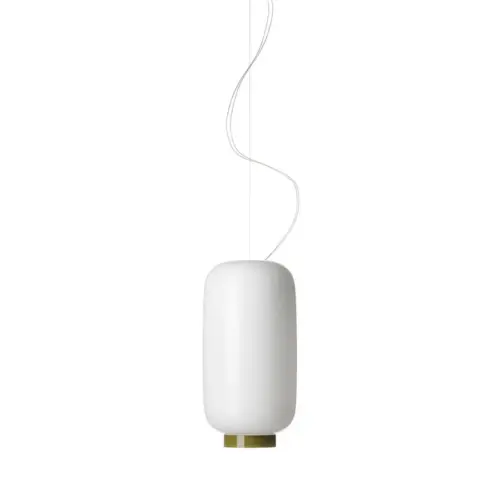
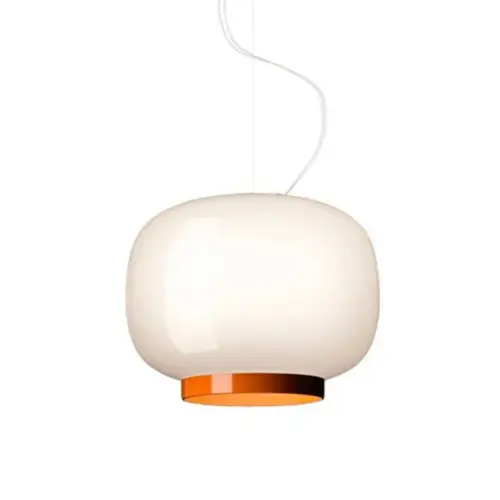
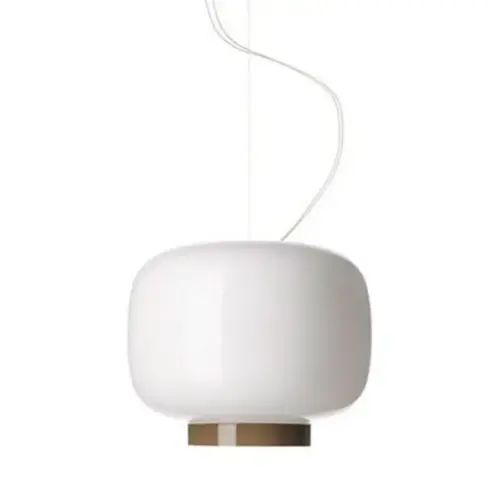
Chouchin is a Japanese word that refers to the traditional and symbolic paper and bamboo lanterns used as illuminated signs outside businesses or as amulets on the exterior of homes. Sober and elegant, Chouchin combines artisanal expertise with a modern and minimalist style. The Chouchin family consists of three models with a colored body in matte glass. Alongside the first version, we find a new version: Chouchin Reverse. The shapes remain the same, but the colors are reversed; the diffuser becomes white while the neck retains the color of the previous version. It's not just a new color, but a new light, a new use. Chouchin Reverse, thanks to its clear blown-glass diffuser, doesn't simply direct light downwards—like the original Chouchin—but also spreads a bright, fluid, and evocative light throughout the surrounding environment.
-
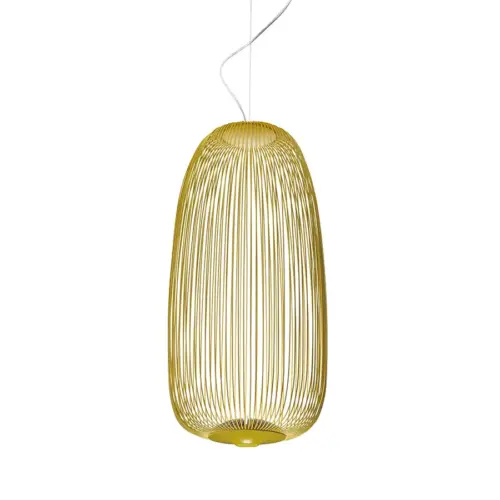
A collection of pendant lamps in two distinct forms. The pendant lamp draws inspiration from the evocative style of antique oriental lanterns and the more domesticated birdcages. Its design originates from the observation of bicycle wheel spokes, from which the project also takes its name: Spokes. The result is a softly shaped lamp with a light volume that contains the light, allowing it to filter into the space. The lightness that characterizes the design is combined with the solidity of its form, crafted from metal rods, and the functionality of the LED light source, which perfectly illuminates the area and creates plays of light and shadow projected onto the walls with a magical, multiplying effect. The design, available in two shapes, two sizes, and two distinct color variations, highlights its versatility, making Spokes a lamp particularly suitable for both residential and public spaces. It can even be perfectly placed in large architectural structures, thanks to the possibility of creating multiple compositions.
-
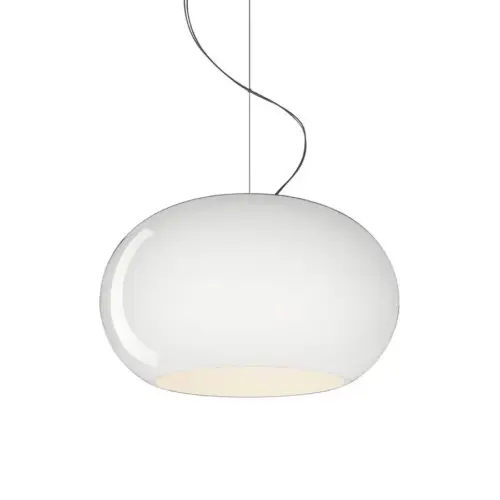
Diffused light pendant lamp. Mouth-blown, jacketed glass diffuser, white on the inside and colored on the outside with a glossy finish. With a "straw" interior, the "warm white" version appears ivory when lit and remains white when off. During the 1990s, Rodolfo Dordoni designed a collection of table, floor, and pendant lamps for Foscarini, featuring strikingly colored blown-glass diffusers and names that evoked natural elements: Fruits, Blossom, and Buds. Now, Buds is being revamped once again, interpreting contemporary tastes to achieve a refined richness and attention to materials. The star of the project, as always, is the blown glass, crafted with five layers of artisanal technique, immediately apparent thanks to the diffuser's wider cut. With the new color range—cool brown, cool gray, bamboo green, and white, with a straw-like interior—Buds takes on a dual character: warm when the lamp is on and cool when it is off.
-
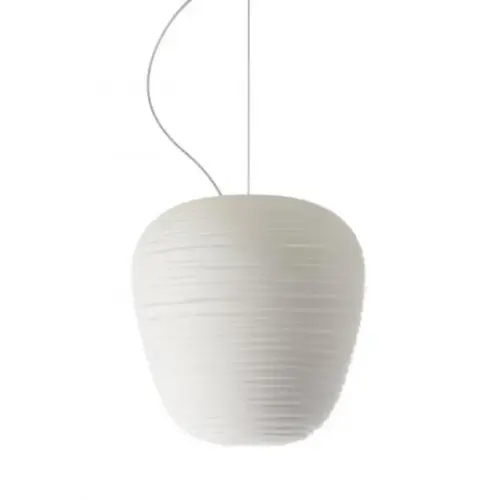
One, two, three light lanterns, yet brimming with seductive tang. Three distinct yet complementary forms, a balance between East and West. A family of lamps that brings a soothing light to diverse settings, translating the magic of rice paper or mulberry bark—the raw materials of Japanese lamps—into the exquisite appearance of blown and satin-finished glass. The horizontal lines etched onto the surface of the lamps create a soft and captivating aesthetic while simultaneously filtering the intensity of the light source, diffusing a full, warm, and gentle glow into the room. With their hand-blown glass bodies and pleasingly plaster-like appearance, the Rituals pendant lamps can be used individually or in harmonious arrangements of 3 to 9 lamps, thanks to the use of a multi-canopy.
-
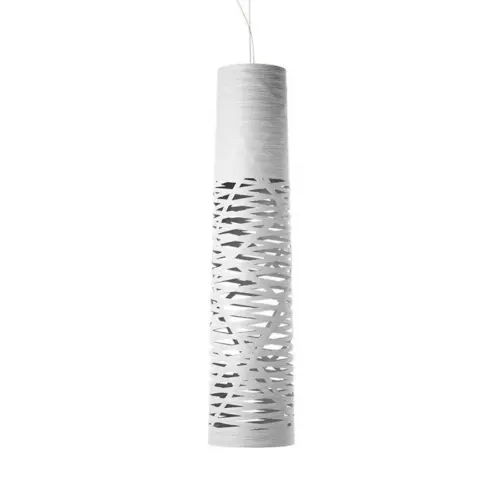
Suspension lamp with diffused and direct light. The diffuser, made of various materials with a fiberglass base, is manufactured by tape molding on a mold with automatic step/design control and is liquid-painted. The allure of a woman's braid is the original inspiration for the Tress lamp family. A design idea brought to life by foscarini through the development of a completely original technological process, in which a ribbon of fiberglass and resin, woven with an orderly randomness, becomes both the structure and decoration of the lamp. Tress changes personality according to the color: light and discreet in the white version, strong and decisive in the black version, volcanic and totemic in the crimson red version, where the contrast between interior and exterior is even more evident, striking in indigo blue, and supremely contemporary in ecru, a shade between gray and beige. The pendant version—available in medium, small, and mini sizes—is designed to illuminate a specific area in the space below; the large Tress pendant, on the other hand, is characterized by a more diffused light. The various sizes can be used individually to highlight a dark corner or a room's space, or in compositions or rows to create perspective effects.
-
Chouchin is a Japanese word that refers to the traditional and symbolic paper and bamboo lanterns used as illuminated signs outside businesses or as amulets on the exterior of homes. Sober and elegant, Chouchin combines artisanal expertise with a modern and minimalist style. The Chouchin family consists of three models with a colored body in matte glass. Alongside the first version, we find a new version: Chouchin Reverse. The shapes remain the same, but the colors are reversed; the diffuser becomes white while the neck retains the color of the previous version. It's not just a new color, but a new light, a new use. Chouchin Reverse, thanks to its clear blown-glass diffuser, doesn't simply direct light downwards—like the original Chouchin—but also spreads a bright, fluid, and evocative light throughout the surrounding environment.
-
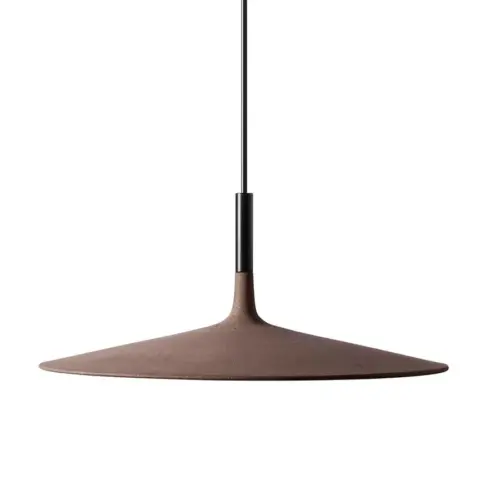
Aplomb Large is a new cement lamp with a distinct shape and functionality compared to the original version. In addition to being wider, Aplomb Large features an integrated LED light source, recessed into the lamp body, which provides a broad downward beam of light, unlike the original Aplomb, which is characterized by focused illumination. Aplomb is handcrafted by expert Italian cement artisans. The design challenge is to achieve thin thicknesses, light forms, and a textured yet pleasant surface. This result is achieved through meticulous care and a deep understanding of the material, which has led to the discovery of a special, highly fluid blend in the mold during production. Among the available colors, to meet diverse design needs, are white, gray, and brown, obtained by adding pigments directly to the mix. Aplomb Large can be placed on a table, peninsula, or counter, at home or in a public space, and is perfect for use alone or in repeated linear compositions.
-
Chouchin is a Japanese word that refers to the traditional and symbolic paper and bamboo lanterns used as illuminated signs outside businesses or as amulets on the exterior of homes. Sober and elegant, Chouchin combines artisanal expertise with a modern and minimalist style. The Chouchin family consists of three models with a colored body in matte glass. Alongside the first version, we find a new version: Chouchin Reverse. The shapes remain the same, but the colors are reversed; the diffuser becomes white while the neck retains the color of the previous version. It's not just a new color, but a new light, a new use. Chouchin Reverse, thanks to its clear blown-glass diffuser, doesn't simply direct light downwards—like the original Chouchin—but also spreads a bright, fluid, and evocative light throughout the surrounding environment.
-
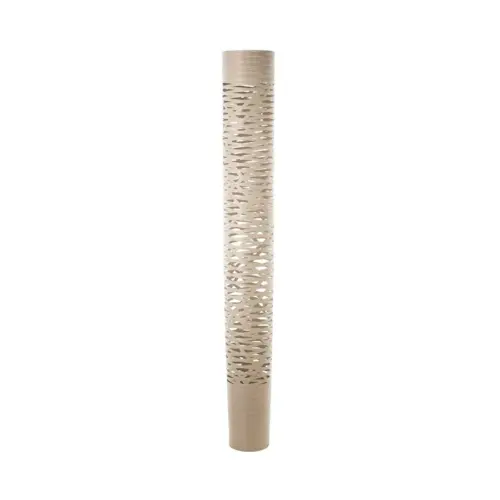
The allure of a woman's braid is the original inspiration for the Tress lamp family. A design idea brought to life by foscarini through the development of a completely original technological process, in which a ribbon of fiberglass and resin, interwoven with an orderly randomness, becomes both the structure and decoration of the lamp. Tress changes personality according to the color: light and discreet in the white version, strong and decisive in the black version, volcanic and totemic in the red version, where the contrast between interior and exterior is even more striking. In the floor-standing version, the frame incorporates the same power cable and simultaneously serves as structure, decoration, and shield, creating an unprecedented interplay of solids and voids, light and shadow. The light that diffuses through the lamp produces a particularly captivating effect thanks to two separate light sources: one in the lower position fully illuminates the interior and highlights the graphic presence of the frame, while the upper one reflects light onto the ceiling. In the medium version, with a single light source at the base within the diffuser, the dimmer on the transparent cable functions as both a gradual light intensity regulator and an on/off switch.
-
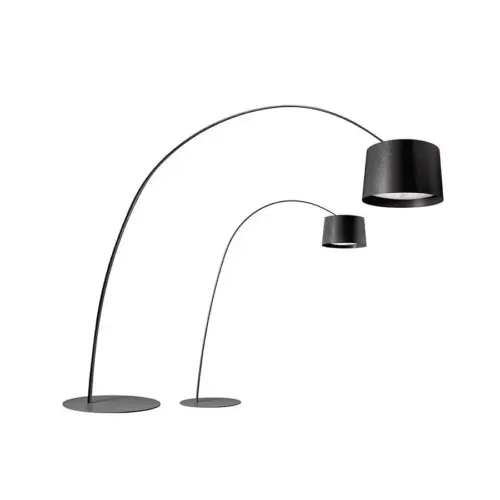
Floor lamp with direct and indirect light. Diffuser and stem made of various materials on a liquid-painted fiberglass base. Four counterweights are included as standard; these are inserted into the corresponding housing above the diffuser to adjust the height. Additional rods are available to extend the arc. The transparent cable has a dimmer switch that functions as both a gradual light intensity regulator and an on/off switch.
-
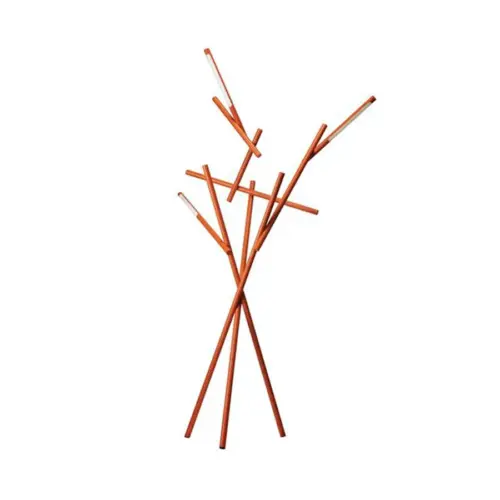
The Tuareg structure draws inspiration from human-made architecture, yet is connected to the natural world, using materials like branches and reeds, according to an instinctive and dynamic creative logic. Chaos transforms into order, creating an unconventional geometry reminiscent of land art. Independently controlled LED light sources are integrated at the end, adjustable 350° to change the lighting effect and the lamp's functionality. The structure is further refined by integrated touch-sensitive switches and a cable management system concealed within the tubular elements. The electronic transformer is located in the plug. The lamp can be operated via a wall switch.
Are you a professional? Contact with us