
-
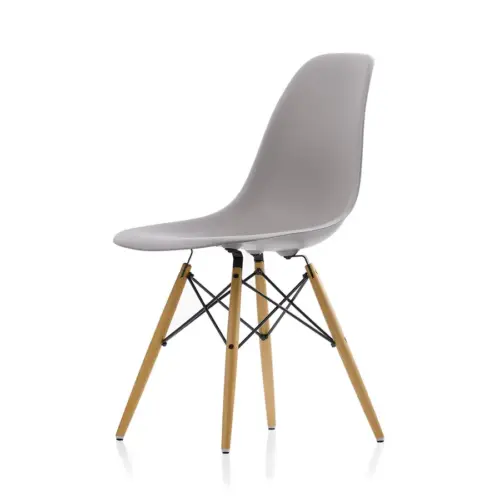
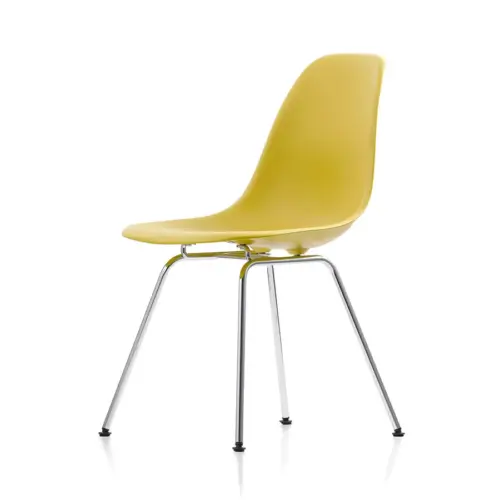
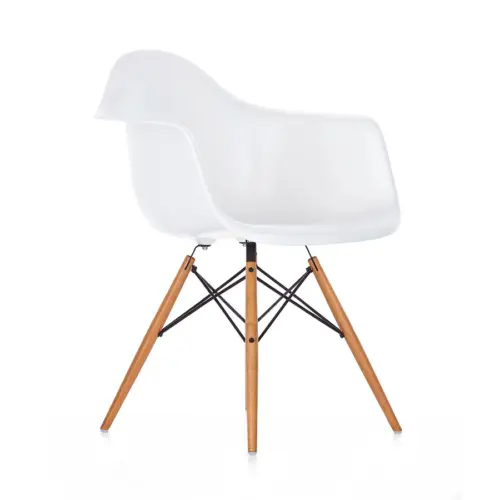
“Getting the most of the best to the greatest number of people for the least”: with these words, Charles and Ray Eames described one of their main goals as furniture designers. None of their works came closer to this ideal than the Plastic Chair. For years, they worked on the idea of a one-piece seat shell molded to fit the contours of the human body. In the 1940s, when their experiments with plywood and aluminum sheeting didn't yield the expected results, their search for alternative materials led them to fiberglass-reinforced polyester resin.
-
“Getting the most of the best to the greatest number of people for the least”: with these words, Charles and Ray Eames described one of their main goals as furniture designers. None of their works came closer to this ideal than the Plastic Chair. For years, they worked on the idea of a one-piece seat shell molded to fit the contours of the human body. In the 1940s, when their experiments with plywood and aluminum sheeting didn't yield the expected results, their search for alternative materials led them to fiberglass-reinforced polyester resin.
-
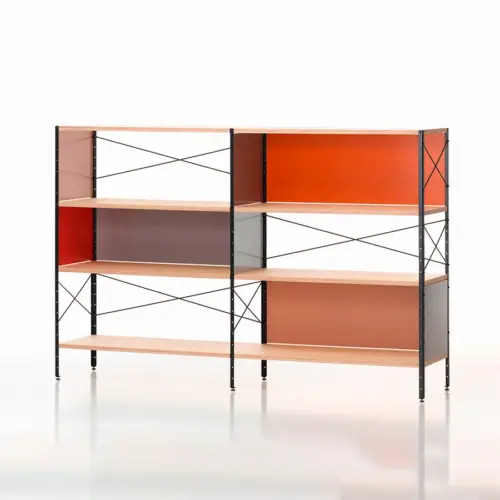
In 1949, Charles and Ray Eames designed an innovative system of freestanding, multifunctional shelving and desks. Like the Eames House, built around the same time, these designs adhered to the principles of industrial production: we're talking about the Eames Storage Unit (ESU) and the Eames Desk Unit (EDU). In collaboration with the Eames Office and Dutch designer Hella Jongerius, the new colors were carefully defined to give ESU a renewed and contemporary look, but at the same time, pay homage to the spirit of the forties and fifties.
-
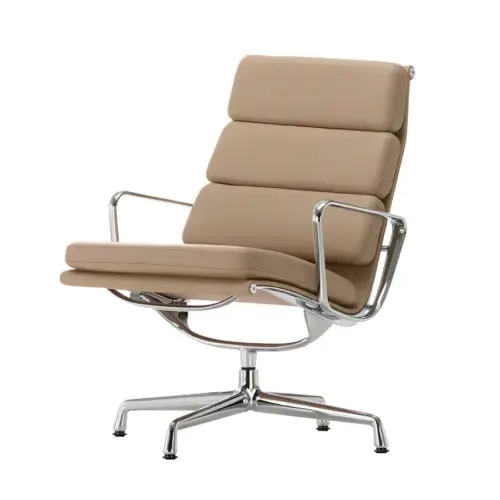
The Soft Pad Group design dates back to 1969. In both construction and form, the Soft Pad Chairs are similar to the Aluminium Group. However, the stitched cushions create a striking contrast with the slender aluminum profiles. The Soft Pad Group chairs are plusher and more voluptuous than those of the Aluminium Group, yet they retain the same clean lines. The chairs conform to the body and provide exceptional comfort. Vitra has been producing Soft Pad Group chairs for decades, always maintaining high quality. This experience allows us to offer a 30-year guarantee* on all Soft Pad Group chair models.
-
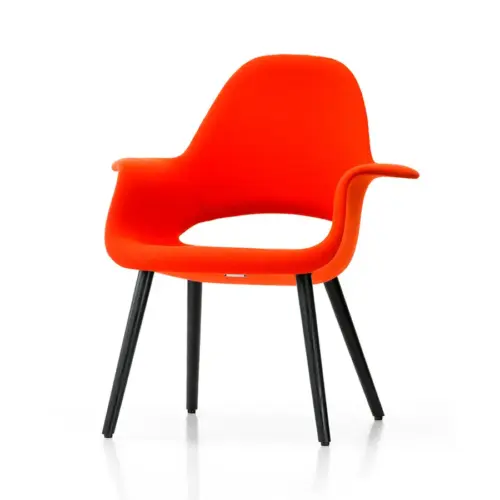
The Organic Chair—a small, comfortable reading chair—was presented in 1940, in several versions, at the "Organic Design in Home Furnishings" competition organized by the Museum of Modern Art in New York. The sculptural forms of this design were ahead of their time, although at that time it could not be mass-produced because the appropriate production techniques did not yet exist. It wasn't until 1950 that it became possible to manufacture and market in large quantities curved seat shells with organic shapes, such as the well-known Plastic Armchair by Charles and Ray Eames or the Tulip Chair by Saarinen. There is a version of the Organic Chair with a wider and longer backrest and broader armrests, the Organic Highback chair. The Organic Conference version is also suitable for dining tables. The Organic Conference chair has a higher seat and a more upright back than the Organic Chair and Organic Highback, models designed for reading. This exceptionally comfortable chair is ideal as a dining chair or for use in meeting rooms.
-
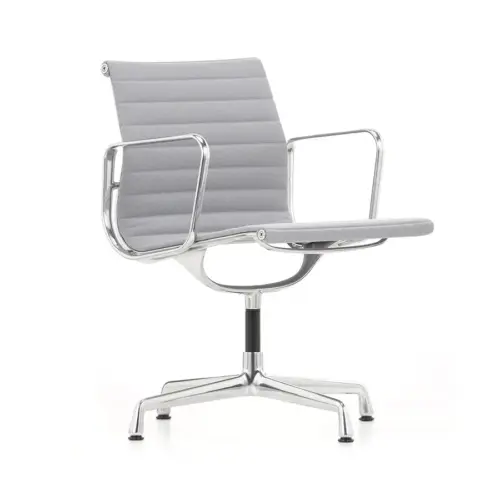
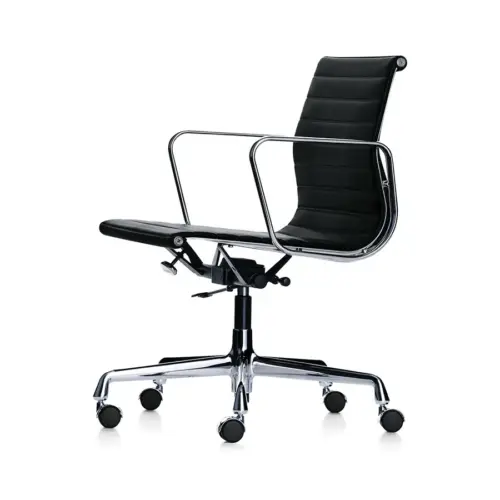
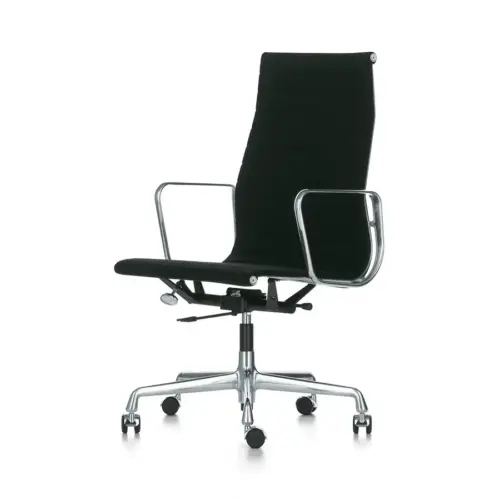
The original Aluminium chair is one of the great masterpieces of 20th-century design. Created by Charles & Ray Eames in 1958 and produced by Vitra, it has become an icon of modern furniture thanks to its timeless elegance, precise construction, and remarkable comfort. Originally designed for high-end corporate interiors, it remains synonymous with sophistication and prestige in both offices and discerning homes.
Its polished or chromed aluminum frame, combined with a taut, unpadded upholstery that conforms to the body, creates an exceptionally comfortable and durable seating experience. Available in multiple versions (swivel, with or without casters, high or medium back), the Aluminium chair offers a light and refined aesthetic that fits seamlessly into environments with high formal and functional demands.
¿Dónde y cómo encaja la silla Aluminium?
The Vitra Aluminium collection is ideal for executive offices, high-level meeting rooms, designer home offices, or management spaces where aesthetics and ergonomics must be equally important. Its presence conveys authority, good taste, and attention to detail without being ostentatious.
-
La Aluminium Chair es uno de los diseños de mobiliario más significativos del siglo XX. La característica más destacada de la Aluminium Chair es la inteligente combinación de sus materiales. El acolchado se fija en los perfiles laterales de aluminio. Así, deja de ser una mera cubierta para convertirse en un elemento que sustenta la construcción. Se adapta al cuerpo, ofreciendo un gran confort incluso sin un costoso acolchado. Vitra has been producing the Aluminium Chair range for decades, consistently maintaining high quality. This experience allows us to offer a 30-year guarantee on all chairs in the Aluminium group.
-
The Aluminium Chair is one of the most significant furniture designs of the 20th century. Its most striking feature is the clever combination of materials. The upholstery is attached to the aluminum side profiles, transforming it from a mere cover into a structural element. It conforms to the body, offering exceptional comfort even without expensive padding. Vitra has been producing the Aluminium Chair range for decades, consistently maintaining high quality. This experience allows us to offer a 30-year guarantee on all chairs in the Aluminium group.
-
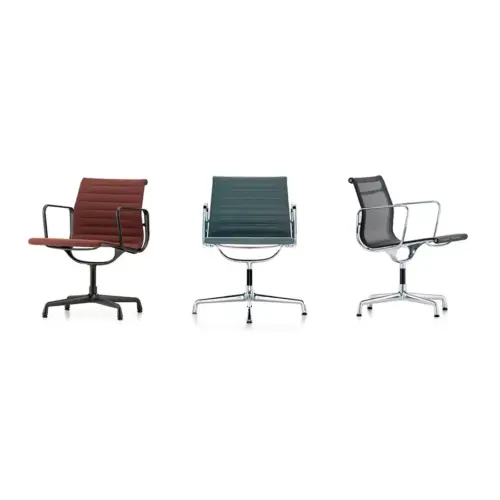
The Aluminium Chair is one of the great furniture designs of the 20th century. Charles and Ray Eames originally designed it in 1958 for the private residence of an art collector in Columbus, Indiana (USA). For its construction, the design duo departed from the traditional shell-style seat, opting instead to stretch a fabric or leather panel between two aluminum frames to create a firm yet flexible seat. The Aluminium Chair, with its fine padding, conforms to the user's body and is exceptionally comfortable. The Aluminium Group includes several distinct models for use in homes, offices, and public spaces. Thanks to the wide variety of models, aluminum bases with polished, chromed, or powder-coated black finishes, and the extensive selection of fabric or leather upholstery colors, the perfect Aluminium Chair can be found for any setting. Vitra has produced Aluminium Group chairs with the same superior quality for decades. This experience allows us to offer a 30-year warranty* on all Aluminium Group chair models.
-
Vitra expands its product range by reintroducing the Plastic Armchair with full padding. The organically shaped, upholstered shells offer a high level of comfort and create a welcoming atmosphere. The 13 Hopsak upholstery fabric colors can be freely combined with the eight available seat shell colors. In addition, several bases are available, resulting in a wide variety of individual combination possibilities. The padding is attached to the shell with black or white webbing.
Are you a professional? Contact with us