
-
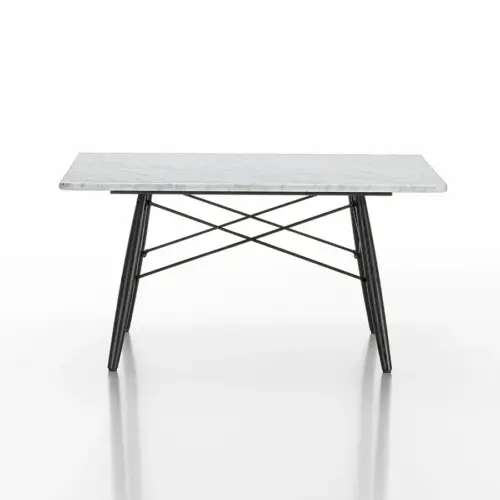
En 1949, Charles y Ray Eames diseñaron una mesa de café pensada exclusivamente para su propia residencia, la legendaria Eames House de Pacific Palisades, cerca de Los Ángeles. Desde entonces, esta mesa ha pasado a formar parte de la singular decoración de este lugar histórico. Su tablero rectangular, que le da al mismo tiempo una imagen de sencillez y sofisticación, estaba originalmente cubierto de pan de oro. La base con patas cónicas es una variación de la base de madera de las Eames Plastic Chairs. En los años siguientes, Charles y Ray Eames fabricaron otras dos de estas mesas con tableros distintos, uno de mármol y otro de madera.
-
Charles and Ray Eames are among the most important figures in 20th-century design. Their work encompasses fields such as furniture design, film, photography, and exhibition design. Vitra is the only company authorized to manufacture their products in Europe and the Middle East. If you own an Eames product manufactured by Vitra, you can be sure it is an authentic Eames.
-
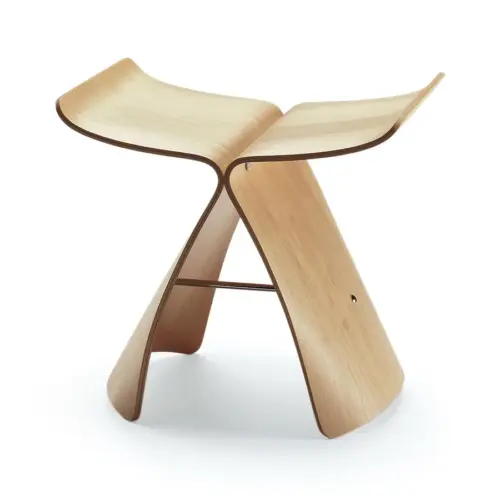
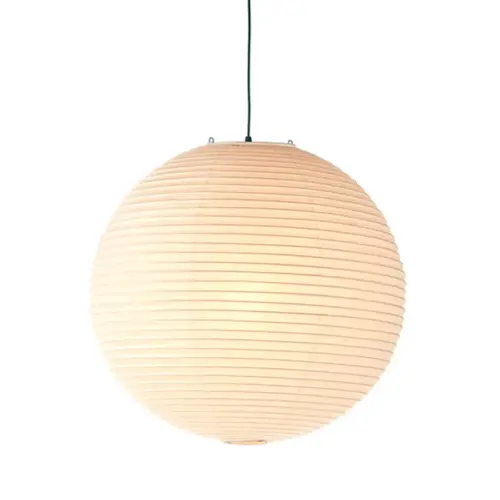
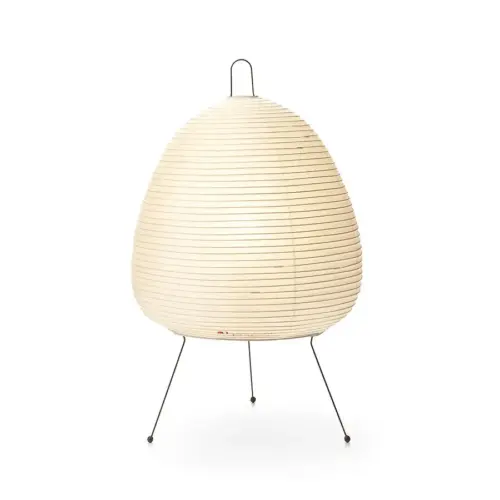
Sori Yanagi was born in 1915 in Tokyo. She studied at the local art school and worked between 1940 and 1942 in the office of designer Charlotte Perriand. In 1952, he founded the Yanagi Industrial Design Institute, which over time would design an extraordinary number of furniture pieces and everyday objects. Sori Yanagi's organically shaped designs combined Western industrial design with traditional Japanese craftsmanship. Thus, Sori Yanagi became one of the most significant Japanese designers of the postwar era. In addition to furniture, he designed lamps, glassware, cutlery, children's toys, subway stations, cars, and motorcycles.
-
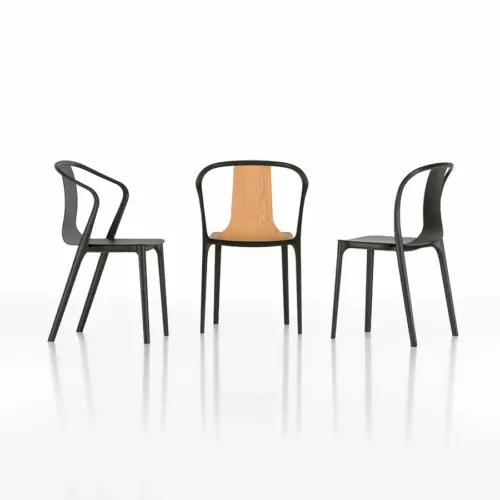
Belleville is the name of a lively Parisian neighborhood where designers Ronan and Erwan Bouroullec have their studio. The Belleville Chair's visual references can be found in the classic furnishings of French restaurants and the cheerful atmosphere of this Parisian corner. The chair's familiar shape—even in a contemporary context—might initially seem obvious, but it also evokes a sense of mystery and intrigue, as the chair's material, structure, and craftsmanship are only revealed upon closer inspection.
-
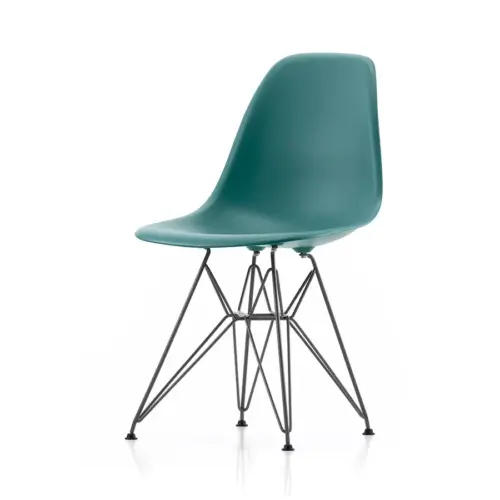
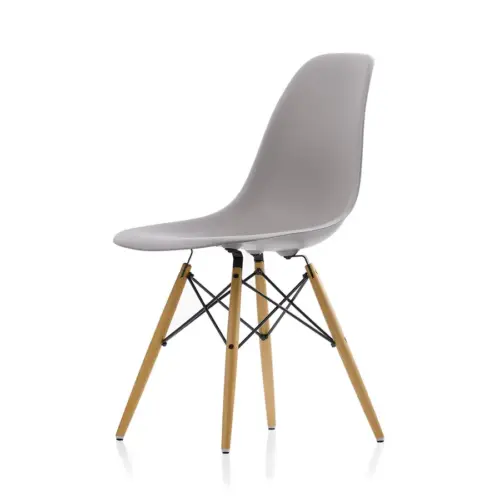
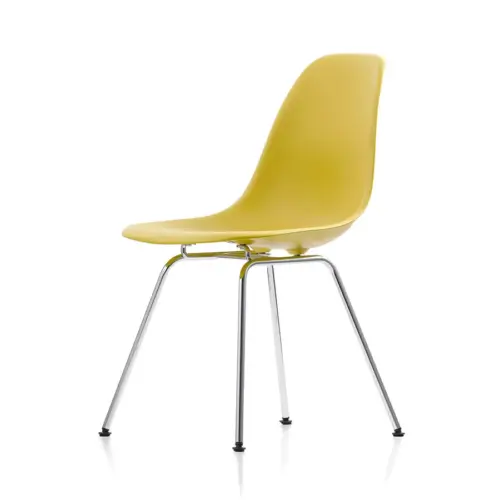
“Getting the most of the best to the greatest number of people for the least”: with these words, Charles and Ray Eames described one of their main goals as furniture designers. None of their works came closer to this ideal than the Plastic Chair. For years, they worked on the idea of a one-piece seat shell molded to fit the contours of the human body. In the 1940s, when their experiments with plywood and aluminum sheeting didn't yield the expected results, their search for alternative materials led them to fiberglass-reinforced polyester resin.
-
“Getting the most of the best to the greatest number of people for the least”: with these words, Charles and Ray Eames described one of their main goals as furniture designers. None of their works came closer to this ideal than the Plastic Chair. For years, they worked on the idea of a one-piece seat shell molded to fit the contours of the human body. In the 1940s, when their experiments with plywood and aluminum sheeting didn't yield the expected results, their search for alternative materials led them to fiberglass-reinforced polyester resin.
-
“Getting the most of the best to the greatest number of people for the least”: with these words, Charles and Ray Eames described one of their main goals as furniture designers. None of their works came closer to this ideal than the Plastic Chair. For years, they worked on the idea of a one-piece seat shell molded to fit the contours of the human body. In the 1940s, when their experiments with plywood and aluminum sheeting didn't yield the expected results, their search for alternative materials led them to fiberglass-reinforced polyester resin.
-
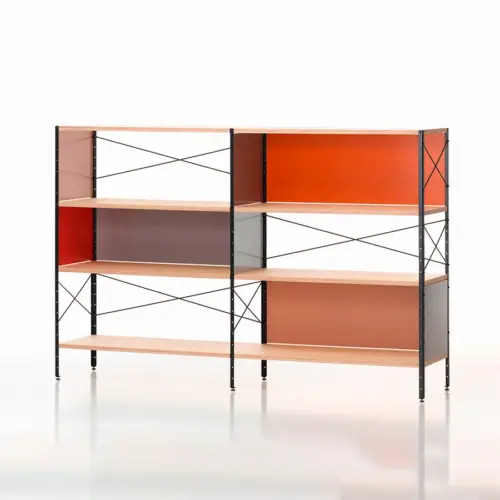
In 1949, Charles and Ray Eames designed an innovative system of freestanding, multifunctional shelving and desks. Like the Eames House, built around the same time, these designs adhered to the principles of industrial production: we're talking about the Eames Storage Unit (ESU) and the Eames Desk Unit (EDU). In collaboration with the Eames Office and Dutch designer Hella Jongerius, the new colors were carefully defined to give ESU a renewed and contemporary look, but at the same time, pay homage to the spirit of the forties and fifties.
-
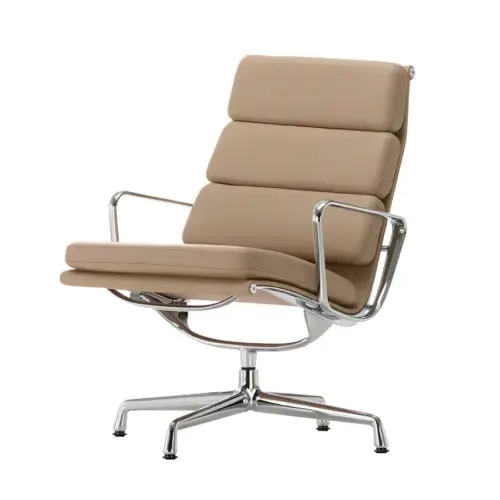
The Soft Pad Group design dates back to 1969. In both construction and form, the Soft Pad Chairs are similar to the Aluminium Group. However, the stitched cushions create a striking contrast with the slender aluminum profiles. The Soft Pad Group chairs are plusher and more voluptuous than those of the Aluminium Group, yet they retain the same clean lines. The chairs conform to the body and provide exceptional comfort. Vitra has been producing Soft Pad Group chairs for decades, always maintaining high quality. This experience allows us to offer a 30-year guarantee* on all Soft Pad Group chair models.
Are you a professional? Contact with us