
-
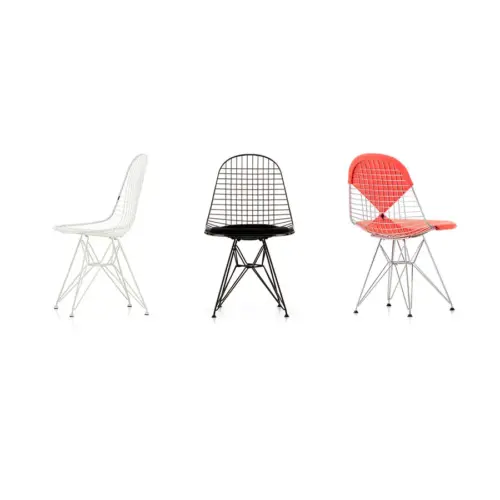
Designed by Charles and Ray Eames, the Wire Chair's seat shell mimics the shape of the Eames Plastic Side Chair. Mounted on the iconic Eiffel Tower base, the DKR combines transparency and functionality. The powder-coated version is also suitable for gardens and patios. The DKR chair is optionally available with a seat cushion or as a two-piece seat and back upholstered in fabric or leather.
-
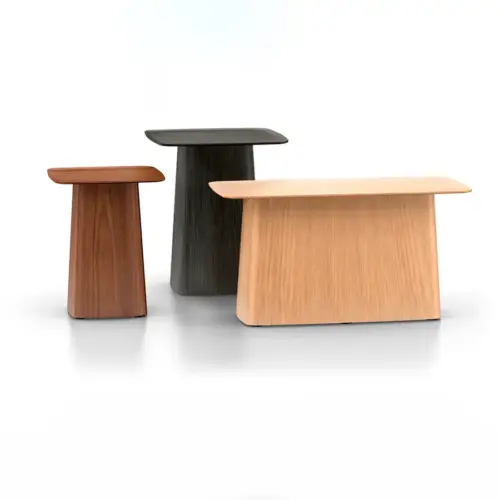
The design of the Wooden Side Tables corresponds to that of the Metal Side Tables created for Vitra by Ronan and Erwan Bouroullec in 2004. As with their counterparts, the appeal of these wooden side tables lies in the contrast between the delicate tabletops and the robust appearance of their pedestal bases. One of their distinguishing features is the gently molded edges of the tabletops, which form a subtle rim, lending them an elegant Japanese feel.
-
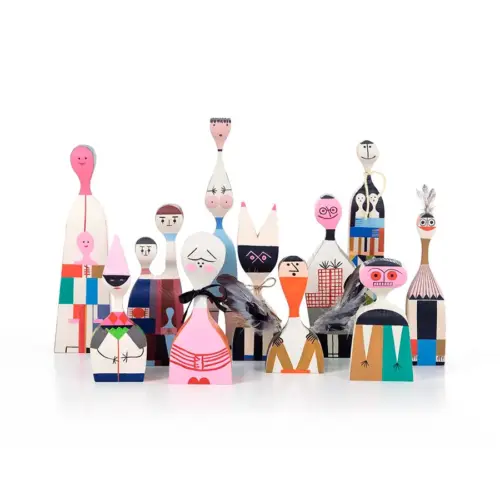
The numerous models in Alexander Girard's Wooden Dolls family are lovingly hand-painted, one by one. This film showcases the steady hand required for each brushstroke in this meticulous craft and why each of these wooden figures is a unique object. VIDEO
-
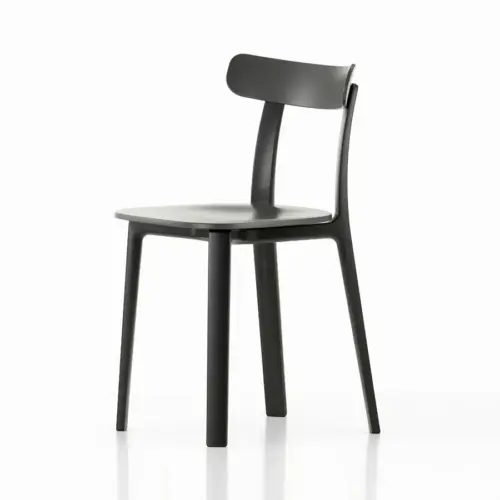
At first glance, the All Plastic Chair is reminiscent of the simple, classic wooden chairs so common in Europe for many decades. However, by adapting the design to an alternative material, both its appearance and performance have been significantly improved. The flat shapes of the frame are molded from a single piece, while the thin surface of the seat has an organic shape and the backrest is thinner than that of conventional wooden chairs.
-
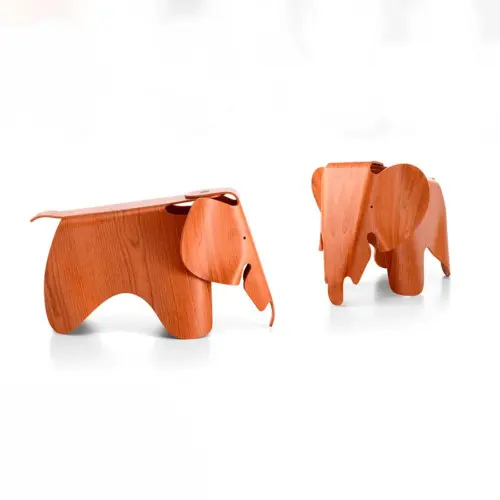
In the early 1940s, Charles and Ray Eames spent several years developing and perfecting a technique for molding laminated wood into three-dimensional shapes. During this process, they created several pieces of furniture and sculptures. Of these early designs, the two-piece elephant was the most technically complex object, due to its many tight curves. It never reached the production stage. One of the prototypes was given to Charles's daughter, Lucia Eames, who was 14 at the time. Later, it was loaned to the Museum of Modern Art in New York for the 1946 exhibition. It remains in the Eames family's possession.
-
In the early 1940s, Charles and Ray Eames spent several years developing and perfecting a technique for molding laminated wood into three-dimensional shapes. During this process, they created several pieces of furniture and sculptures. Of these early designs, the two-piece elephant was the most technically complex object, due to its many tight curves. It never reached the production stage. One of the prototypes was given to Charles's daughter, Lucia Eames, who was 14 at the time. Later, it was loaned to the Museum of Modern Art in New York for the 1946 exhibition. It remains in the Eames family's possession.
-
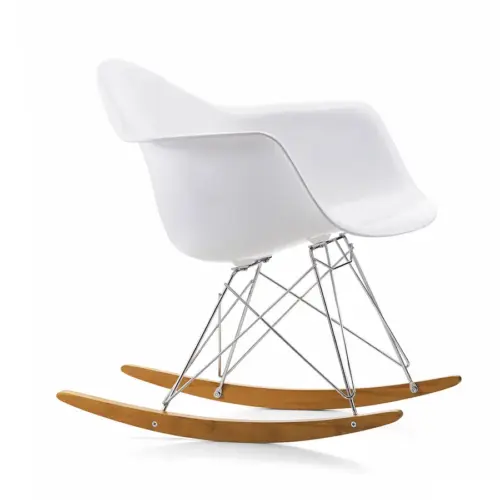
“Getting the most of the best to the greatest number of people for the least”: with these words, Charles and Ray Eames described one of their main goals as furniture designers. None of their works came closer to this ideal than the Plastic Chair. For years, they worked on the idea of a one-piece seat shell molded to fit the contours of the human body. In the 1940s, when their experiments with plywood and aluminum sheeting didn't yield the expected results, their search for alternative materials led them to fiberglass-reinforced polyester resin.
-
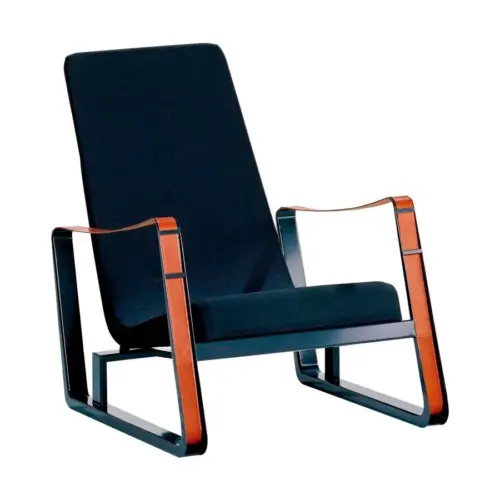
The Cité armchair, designed for a competition to furnish the student residence at the Cité Universitaire de Nancy, is one of Prouvé's early masterpieces. This dynamic armchair, with its distinctive powder-coated steel sleds and wide leather straps as armrests, was used by Prouvé himself in his living room. Its generous dimensions and inviting upholstery contribute to its exceptional comfort.
-
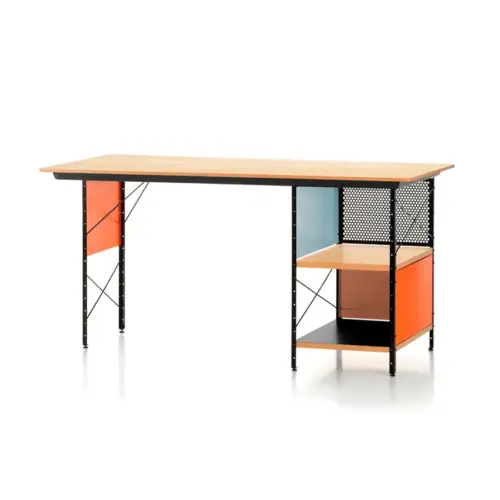
In collaboration with the Eames Office and Dutch designer Hella Jongerius, a new color palette was carefully selected to give EDU a fresh, contemporary look while also paying homage to the spirit of the 1940s and 50s. With its attractive combination of colored panels, the EDU Desk adds a cheerful and inviting touch to any home office. The panels also serve as a discreet screen and partially conceal the two storage compartments. The metal support frame is height-adjustable to accommodate uneven floors.
-
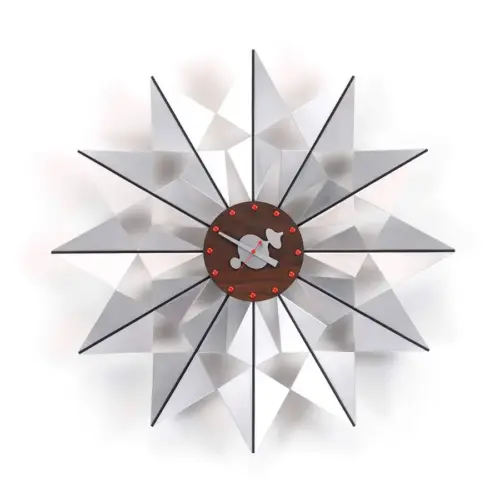
These ideas formed the basis of their first collection of 14 pieces, which included wall clocks and small table clocks with a completely new style and were introduced to the market in 1949. Although all models shared a common characteristic – the absence of numbers – the diversity of shapes, colors, materials and designs could not have been greater.
Are you a professional? Contact with us