

If you are furnishing a terrace or garden on the Costa del Sol, two names come up again and again among luxury outdoor furniture brands: Kettal and DEDON. Both sit at the top end, both cope with sun and salt air, and choosing between them is rarely straightforward. This guide compares Kettal or DEDON honestly: their origins, what each does well, materials, designers and the care each piece needs by the sea. Both are in our catalogue at Oboe, so instead of naming a winner, we explain which brand fits which home.
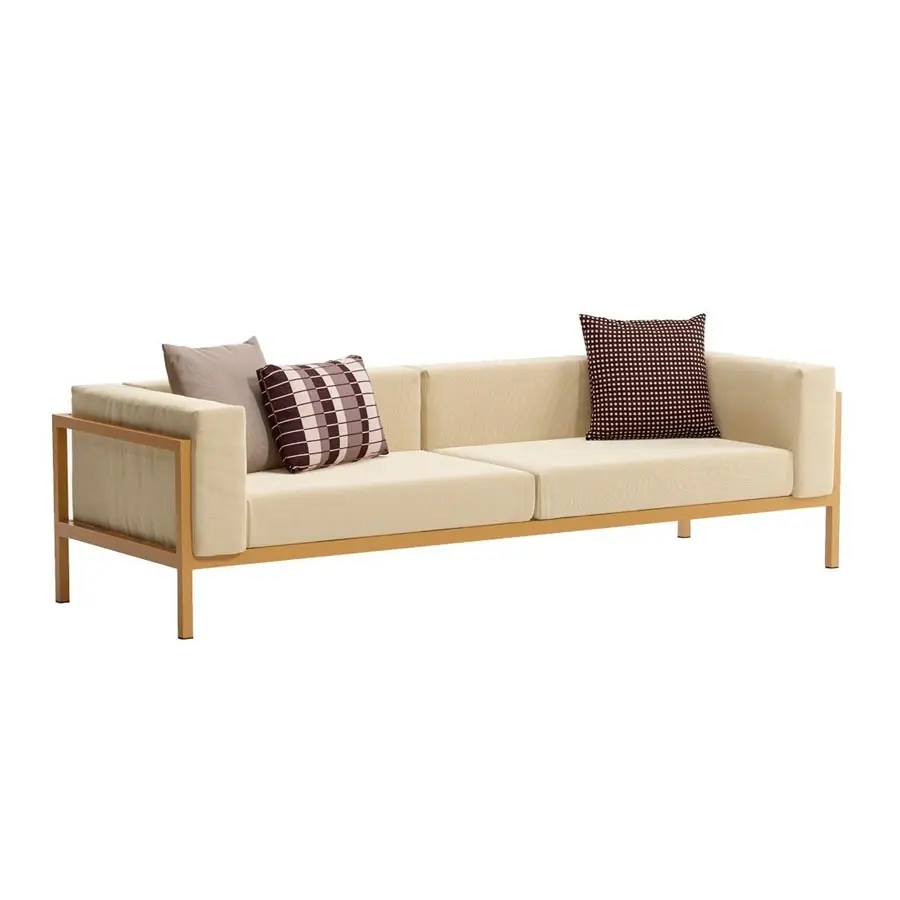
Two brands, two origins
Kettal began in 1966 as a family business founded by Manuel Alorda, starting with aluminium camping equipment. It is based in Barcelona and manufactures in its own facility in a coastal town 45 kilometres away, with a presence in more than 80 countries. In 2026 it marks its 60th anniversary. DEDON is younger. Bobby Dekeyser, a former professional football goalkeeper, founded it in 1990 around a weather-resistant synthetic fibre for woven outdoor furniture. Its headquarters have sat on the Lüneburg Heath in Germany since 1995, and it reaches more than 100 countries. The short version: Kettal grew out of metal and now works many materials, while DEDON was born from a single fibre and built a craft around it. You can find Kettal and DEDON in our catalogue.
Kettal: aluminium, rope, teak and a broad design roster
Kettal makes a wide range: sofas, armchairs, chairs, tables, sun loungers, daybeds, parasols, pergolas and pavilions, lamps, rugs and outdoor kitchens. Its materials span lacquered aluminium finished in the Terrain paints designed by Doshi Levien, Aluwood aluminium with a wood-grain finish, ropes introduced with the Landscape collection in 2009 (including Bela Rope in polypropylene across 19 colours), an own synthetic fibre that imitates rattan, the Soga polypropylene material by Vincent Van Duysen, teak from sustainably managed plantations, and own textiles such as Rockress. If you are looking at Kettal outdoor furniture in Marbella, the modular Landscape sofa and the Maia armchair are good starting points. The breadth means Kettal can furnish a full terrace in one visual language.
DEDON: the hand-woven fibre
DEDON is defined by hand-weaving. It has produced in Cebu, in the Philippines, since 1994, with its own 15,500-square-metre factory there since 2000 and around 260 artisans. Every piece is woven by hand: a single item can use up to 1,700 yards of fibre and 60 hours of weaving. DEDON Fibre is developed and made by the brand in northern Germany; the company states it resists UV, salt water, chlorine and extreme temperatures without cracking or fading, and does not absorb moisture. EcoCycle Fibre, launched in 2021, is 90% plant-based. If you are weighing DEDON outdoor furniture in Marbella, the Seashell chair and the Lou sofa show the range of the weave.
Materials against materials
This is where the two brands separate. Kettal offers choice: aluminium if you want something light and architectural, teak if you want warmth and patina, rope for a softer, tactile seat, and fibre where you want the woven look. DEDON concentrates on its fibre, refined over three decades, with cushions in solution-dyed acrylic. Neither approach is better. A varied terrace with different zones may suit Kettal’s wider palette, while a scheme built around one consistent woven texture leans towards DEDON. Both belong on any shortlist of luxury outdoor furniture brands for a coastal home. Our outdoor furniture pages show how these materials read in a real setting.
Designers and collections
Kettal works with a long list of designers. Patricia Urquiola created Maia, Mesh, Band, Roll and Vimini; Jasper Morrison, Park Life; Doshi Levien, the high rope-backed Cala; Rodolfo Dordoni, Bitta, with braided rope inspired by mooring lines; Vincent Van Duysen, Giro; and Kettal Studio, the modular Landscape sofa. It also collaborates with Antonio Citterio, Ronan Bouroullec, Naoto Fukasawa and Konstantin Grcic. DEDON’s roster is tighter but distinctive: Richard Frinier since 1998, and Jean-Marie Massaud and Philippe Starck since 2008. Signature pieces include the NESTREST by Daniel Pouzet and Fred Frety, SWINGREST by Daniel Pouzet, MBRACE by Sebastian Herkner, SEAX by Jean-Marie Massaud, MU by Toan Nguyen, and the Seashell NUO in 100% EcoCycle Fibre.
Care on the coast
Salt air and strong sun ask more of any material. Kettal recommends sealing teak every three months; cleaning aluminium with lukewarm water and a neutral soap, avoiding cleaning above 25°C and washing more often near the coast; and cleaning rope with a brush or vacuum and mild soap. DEDON advises cleaning its fibre with a cloth, lukewarm water and mild soap, without alcohol or solvents, and a pressure washer only on low. Its cushions are solution-dyed acrylic, washable at 30°C without bleach, and should not be left outside permanently. As common sense, rinse with fresh water after windy days and cover or store cushions over winter.
Which one fits your home
Choose Kettal if you want variety, the option of teak or aluminium, and a broad catalogue of designers to match different corners of a large terrace or garden. Choose DEDON if you are drawn to a single, hand-woven character and want that texture to carry the whole scheme. In practice, the decision is easier once you handle the finishes and fabrics in person, since the same rope or fibre reads differently in Costa del Sol light than on a screen. Book an appointment at our two-floor Marbella showroom near Puerto Banús, or visit our Málaga showrooms. Our team, who all speak English, can talk you through both brands, and our interior design service can plan a full terrace. You can also request a quote for any piece.
Frequently asked questions
Is Kettal or DEDON better for a Costa del Sol terrace?
Neither is simply better. Kettal offers a wider choice of materials, including aluminium, teak and rope, while DEDON focuses on its hand-woven fibre. The right pick depends on the look you want and how varied your terrace is. Seeing the finishes in person makes the choice clearer.
What materials does Kettal use for outdoor furniture?
Kettal works with lacquered aluminium in its Terrain paints, Aluwood with a wood-grain finish, ropes such as Bela Rope in 19 colours, an own rattan-like synthetic fibre, the Soga polypropylene material, teak from sustainably managed plantations, and own textiles including Rockress.
Is DEDON fibre suitable for coastal weather?
DEDON develops and makes its fibre in northern Germany. According to the brand, it resists UV, salt water, chlorine and extreme temperatures without cracking or fading, and does not absorb moisture. Its EcoCycle Fibre, launched in 2021, is 90% plant-based.
How do I care for these pieces by the sea?
Kettal suggests sealing teak every three months and cleaning aluminium with lukewarm water and neutral soap. DEDON advises a cloth, lukewarm water and mild soap for its fibre, without solvents. As common sense, rinse with fresh water after windy days and cover cushions over winter.
Can I see Kettal and DEDON at Oboe in Marbella or Málaga?
Both brands are in our catalogue. We cannot say which pieces are out at any moment, so we recommend booking an appointment at our two-floor Marbella showroom near Puerto Banús or our Málaga showrooms. Our team speaks English and can show you the finishes and fabrics.